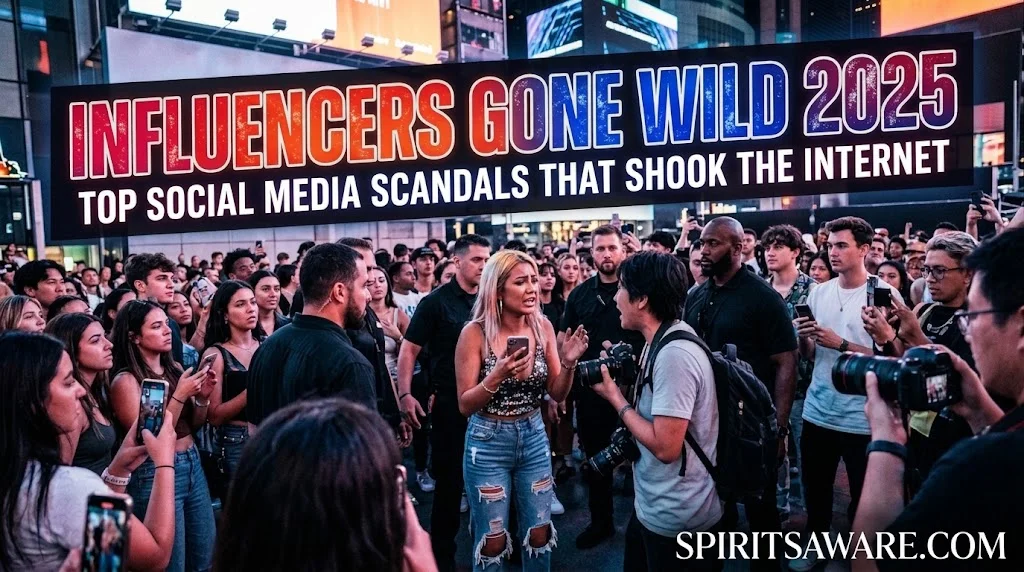
Social media influencers can build careers around trust, entertainment, lifestyle advice, and carefully curated glimpses into their everyday lives. But in 2025, several high-profile controversies reminded audiences that internet fame comes with serious responsibilities. Questions about artificial intelligence, child privacy, influencer parenting, cultural heritage, and the treatment of young content creators pushed online personalities into uncomfortable public conversations.
The phrase “Influencers GoneWild 2025” captures the internet’s appetite for dramatic creator controversies, but the most important stories go beyond viral clips and angry comment sections. They reveal how quickly public opinion can shift, why brands and platforms face growing pressure to hold creators accountable, and how difficult it can be to separate documented facts from online speculation.
This roundup examines notable influencer controversies from 2025, focusing on events that received credible media coverage and raised broader questions about responsible content creation. Rather than treating every accusation as proven or every disagreement as a scandal, it explains what happened, why people reacted, and what each case reveals about the changing relationship between influencers and their audiences.
Quick Answer: What Were the Biggest Influencer Scandals of 2025?
Some of the most notable influencer controversies of 2025 involved YouTube star MrBeast, family-content creators, and debates about the responsibilities of online personalities.
Major stories included:
- MrBeast’s AI thumbnail controversy: Criticism erupted after he promoted an artificial intelligence tool that could generate video thumbnails using existing creator styles and imagery.
- The Maya archaeological sites dispute: Mexican authorities challenged the commercial use of footage from ancient archaeological sites in a MrBeast video.
- MrBeast’s child privacy and advertising concerns: A children’s advertising watchdog raised concerns about sweepstakes, data collection, and marketing practices associated with his business.
- The mommy-influencer debate: Parenting videos prompted questions about children’s privacy, audience speculation, and the risks of turning family life into entertainment.
- The kidfluencer debate: A Netflix documentary brought renewed attention to the treatment, working conditions, and protection of children featured in online content.
- The James Charles and creator-community controversy: Online discussion surrounding a domestic assault case involving other creators demonstrated how quickly influencers can become part of viral stories, even when the underlying events require careful distinction.
These stories differed in seriousness and evidence. Some involved official scrutiny or public responses, while others centered on audience criticism and broader ethical questions. Understanding those differences is essential to getting the full picture.
Why Influencer Scandals Became Such Big Stories in 2025
Influencer controversies are not new, but their impact has grown as online creators have become business owners, advertisers, entertainers, and public figures. A creator’s social media account can now support merchandise sales, sponsorships, subscription services, entertainment productions, and major commercial partnerships.
That creates a complicated relationship between creators and followers. Audiences may initially connect with an influencer because of humor, beauty tutorials, parenting advice, gaming, or everyday lifestyle videos. Over time, however, followers can develop expectations about the creator’s honesty, values, and behavior.
When a controversy challenges those expectations, the response can be immediate.
Viral Clips Can Turn Small Incidents Into Major Controversies
A short video can reach people who have never watched the creator before. Those viewers may encounter the most controversial moment without seeing the original context, a later correction, or a response from the people involved.
Reaction videos and reposts can amplify the story further. In some cases, the discussion becomes larger than the original event, with different accounts offering competing explanations.
This is why a viral clip should be treated as a starting point for investigation rather than automatic proof of wrongdoing.
Influencers Are Businesses, Not Just Online Personalities
Many prominent creators operate companies with employees, advertising relationships, merchandise, and substantial audiences. Their decisions can therefore affect more than their personal reputations.
A questionable promotion might raise consumer protection concerns. A privacy problem could affect young viewers. A dispute involving a production team could raise questions about workplace policies and the responsibilities of a creator-led business.
The bigger an influencer’s operation becomes, the more important it is to distinguish personal expression from commercial conduct.
Audiences Expect Greater Accountability
Followers increasingly expect creators to explain sponsorships, protect children, respect other people’s work, and acknowledge mistakes. A response that once might have been limited to a brief apology may now prompt demands for changes to business practices or stronger oversight.
However, public pressure does not automatically establish that an allegation is true. Responsible coverage must consider evidence, responses, and the status of any formal investigation or complaint.
MrBeast’s AI Thumbnail Tool Sparks Creator Backlash
One of the most widely discussed creator controversies of June 2025 centered on Jimmy Donaldson, known professionally as MrBeast, and an AI-powered thumbnail generator associated with the creator analytics platform Viewstats.
YouTube thumbnails are the images viewers see before opening a video. They often use expressive faces, bold visual contrasts, dramatic scenes, and short text to attract attention. For creators, an effective thumbnail can be an important part of making a video discoverable.
The controversy began when MrBeast promoted a tool intended to help creators generate thumbnails with artificial intelligence. Critics objected to its ability to imitate existing thumbnail styles and use recognizable visual elements associated with other creators.
Why Did Other Creators Object?
Critics argued that the tool could make it easier to imitate creative work without permission. They also questioned whether a technology promoted by one of YouTube’s most successful personalities could disadvantage smaller artists and designers.
For independent creators, thumbnail design can represent hours of paid work. A tool that produces similar-looking images in seconds raises questions about compensation, originality, and the boundaries between inspiration and imitation.
The debate also reflected wider concerns about generative AI. Supporters often emphasize speed, accessibility, and experimentation. Critics focus on training data, consent, attribution, and the economic consequences for human creators.
These concerns are related but not identical. A design can resemble another creator’s work without necessarily establishing that a legal violation occurred. Determining infringement depends on the specific material, how it was used, and the applicable law.
How Did MrBeast Respond?
Following the backlash, MrBeast acknowledged that the tool had missed the mark. In June 2025, he announced that it would be removed from Viewstats and that the platform would instead provide links to human artists available for commissions.
The response mattered because it moved the conversation beyond whether AI tools are useful. It raised a more practical question: How should a creator-led business respond when a product threatens the interests of the creative community it serves?
What This Controversy Revealed
The episode illustrated a growing challenge for influencers who launch technology products. A tool may be marketed as helpful, but its effects on other people’s livelihoods and intellectual property still matter.
For creators considering AI tools, several principles are worth following:
- Avoid using another artist’s recognizable work without appropriate permission.
- Check whether generated images contain protected logos, characters, or other distinctive elements.
- Be transparent about AI-generated material when disclosure is relevant or required.
- Consider hiring human designers when original creative direction is central to a project.
- Evaluate the practical impact of a product rather than relying solely on its marketing claims.
The controversy did not settle every question about AI and copyright. It did, however, show how quickly creator communities can challenge a product when they believe it threatens their work.
MrBeast’s Maya Ruins Video Raises Questions About Cultural Heritage
Another major MrBeast controversy emerged in May 2025, when a video featuring ancient Maya archaeological sites in Mexico attracted criticism from Mexican authorities.
The video, which showcased archaeological locations and ancient structures, also included promotional material for MrBeast’s chocolate brand. Mexican authorities questioned whether the commercial use of the footage complied with the terms of the filming permissions.
The dispute drew attention because archaeological sites are not ordinary filming locations. They are historically significant places that require preservation, careful management, and respect for their cultural meaning.
Why Was the Video Controversial?
The central issue concerned the relationship between authorized access and commercial use.
Permission to film at a protected location does not necessarily mean that every possible use of the resulting footage is permitted. A production may face restrictions involving advertising, commercial endorsements, filming areas, equipment, or activities at the site.
Mexican authorities challenged aspects of the production and sought compensation from the company involved. MrBeast publicly disputed claims that the filming had violated the applicable permissions.
It is important to distinguish the existence of an official dispute from a final determination of wrongdoing. The public controversy did not, by itself, establish that every allegation against the production was proven.
Why Cultural Heritage Matters to Influencers
Travel and exploration videos can introduce millions of viewers to places they might never visit. That reach can help generate interest in history, tourism, and conservation.
But popular creators also have a responsibility to represent cultural sites accurately and avoid treating them merely as backdrops for commercial promotion.
Responsible creators should:
- Confirm the exact scope of filming permits before production.
- Understand restrictions on advertising and product placement.
- Work with local authorities and qualified cultural experts.
- Avoid implying that access to a site amounts to endorsement by its custodians.
- Explain the historical significance of locations rather than using them solely for dramatic visuals.
The controversy demonstrated that a successful video can still raise legitimate questions about permission, cultural sensitivity, and commercial responsibility.
MrBeast Faces Scrutiny Over Child Privacy and Marketing Practices
In September 2025, the Children’s Advertising Review Unit (CARU), an advertising-industry self-regulatory body, raised concerns about child privacy and marketing practices associated with MrBeast’s business activities.
The concerns involved sweepstakes, collection of personal information, and promotional practices connected with MrBeast and his Feastables brand. The watchdog said certain practices did not comply with its guidelines and raised potential concerns involving children’s privacy protections.
This was significant because MrBeast’s audience includes many young viewers, and his brand combines entertainment with commercial promotions.
What Were the Main Concerns?
The review highlighted issues involving sweepstakes entries and the handling of information from children under 13. It also raised concerns about marketing that could mislead young audiences.
Children may not always recognize the difference between entertainment, advertising, a contest, and a purchase incentive. A promotional message that seems straightforward to an adult can be more confusing to a younger viewer.
The Children’s Online Privacy Protection Act, commonly known as COPPA, establishes requirements for covered online services that collect personal information from children under 13. Depending on the circumstances, those requirements can include obtaining verifiable parental consent.
CARU’s review and recommendations should not be confused with a court judgment or a final government finding of liability. The distinction matters when describing the seriousness and legal status of a controversy.
Why This Case Matters Beyond One Creator
Influencers often have a closer relationship with their audiences than traditional advertisers. Followers may feel that a favorite creator personally recommends a product, rather than viewing the promotion as a conventional commercial message.
That connection can make advertising particularly influential among children.
Brands and creators working with younger audiences should take several precautions:
- Clearly identify paid promotions and sponsored content.
- Explain contest rules in language that children can understand.
- Avoid implying that purchasing more products guarantees a prize.
- Use appropriate safeguards when collecting children’s information.
- Provide clear privacy notices and follow applicable consent requirements.
- Review promotional campaigns before publication rather than waiting for complaints.
The broader lesson is that audience trust creates obligations. A popular creator’s marketing practices deserve scrutiny when they involve children, personal data, or purchase incentives.
The Mommy-Influencer Debate: When Family Life Becomes Content
Parenting content remained a contentious corner of social media in 2025. Family creators frequently share everyday struggles, funny moments, household routines, and emotional experiences with audiences that appreciate their honesty.
But the same openness that makes these accounts popular can create difficult questions about children’s privacy and well-being.
One prominent example involved Hannah Hiatt, a parenting creator whose videos drew public attention after viewers raised concerns about a clip showing an interaction between her young child and his father in a grocery store.
The discussion reflected a broader debate about the expectations placed on parents who document family life online.
Why Did the Controversy Gain Attention?
Parenting influencers often build their audiences by sharing moments that feel personal and unfiltered. Followers may become emotionally invested in a family’s routines and begin interpreting short clips as evidence of how children are treated.
That creates a problem: viewers usually see only a small portion of family life. A brief video may prompt genuine questions, but it rarely provides enough information to establish a complete account of what happened in private.
Online concern can therefore become speculation. Once a clip spreads, commentary may extend beyond the available evidence and expose family members to unwanted attention.
The Difference Between Accountability and Online Harassment
It is reasonable to discuss the ethics of publishing identifiable children’s lives for a large audience. It is also reasonable to ask how creators protect their children from embarrassing or potentially harmful exposure.
However, criticizing a content strategy is different from declaring that a parent has committed abuse based on a short clip.
Responsible discussion should focus on observable conduct, reliable reporting, and the broader implications of family content rather than unsupported accusations.
What Family Creators Can Learn
Parents who monetize family content should think carefully about what their children can meaningfully consent to and how a post might affect them years later.
Useful safeguards include:
- Avoid publishing intimate, humiliating, or distressing moments.
- Keep identifying details such as school locations and daily routines private.
- Do not make a child’s emotional distress the centerpiece of entertainment.
- Consider whether a post will remain appropriate when the child becomes a teenager or adult.
- Establish boundaries between family experiences and commercial obligations.
Children cannot always understand the long-term consequences of becoming recognizable online. Their privacy deserves consideration even when a video appears harmless to the adult posting it.
The Kidfluencer Industry Faces Renewed Scrutiny
The debate over family content became even more prominent in April 2025, when Netflix released Bad Influence: The Dark Side of Kidfluencing. The three-part documentary examined the world of child influencers through the experiences of Piper Rockelle and former members of her online group, commonly known as the Squad.
The documentary brought renewed attention to concerns about how children are managed, filmed, and monetized in the creator economy.
What Is Kidfluencing?
Kidfluencing refers to the creation of online content featuring children, often through family channels, entertainment groups, lifestyle videos, or accounts built around a young personality.
These channels can attract substantial audiences and generate income through advertisements, sponsorships, merchandise, and other commercial activities. But children featured in such content may have limited control over their working conditions, online identities, and the long-term use of their images.
The central challenge is balancing a child’s participation in entertainment with their rights to safety, privacy, education, and an ordinary childhood.
Why Did the Documentary Generate Discussion?
The series examined allegations and disputes involving the management of young creators, including a 2022 lawsuit brought by 11 former collaborators against Piper Rockelle’s mother, Tiffany Smith. The former collaborators sought damages and raised allegations concerning their experiences working within the group.
The legal claims and the documentary’s portrayal of events should be distinguished from any final judicial findings. Allegations presented in a lawsuit are not automatically proven simply because they receive television coverage.
Nevertheless, the case highlighted important questions about the responsibilities of adults who manage children in commercial entertainment.
The Ethical Questions Behind Child Influencing
Traditional entertainment industries have established rules and protections for child performers, although the exact requirements vary by jurisdiction and type of work. Online content creates additional challenges because videos may be produced at home, distributed internationally, and monetized through systems that do not resemble conventional employment.
Important questions include:
- Who controls the money earned from content featuring a child?
- How much participation is reasonable to expect from a young performer?
- Can a child refuse to appear in a video without facing pressure?
- What happens to published content when a child wants it removed?
- Who is responsible for protecting young creators from harassment?
- How can parents balance business interests with a child’s best interests?
These questions matter even when no formal allegation has been made. A creator economy that includes children needs safeguards before a controversy occurs, not just apologies afterward.
The James Charles and Creator-Community Controversy
In May 2025, beauty influencer James Charles became part of online discussion surrounding a domestic assault case involving creators Kayla Malec and Evan Johnson.
The episode illustrated how a controversy involving one set of online personalities can pull other creators into the conversation through public reactions, social connections, and audience speculation.
It is important to distinguish being discussed in connection with a controversy from being accused of, charged with, or found responsible for the underlying conduct. Those are different situations and should never be treated as interchangeable.
Why Did the Story Spread?
Influencer audiences often follow multiple creators who share social circles, collaborate, or interact publicly. When a serious incident involves someone in that network, followers may look to familiar personalities for reactions or explanations.
Posts, reaction videos, and comments can quickly become part of the story itself. As a result, the discussion may expand beyond the original incident and include people whose roles are different or unclear.
This can make it difficult for audiences to understand what has actually been established.
What Does This Reveal About Online Accountability?
The episode offers a useful reminder about responsible coverage of creator controversies.
- Connection is not proof of involvement. Knowing or discussing another creator does not establish responsibility for their actions.
- Viral claims require context. A repost or reaction video may omit relevant information.
- Serious allegations deserve careful language. Reports should distinguish allegations, police actions, charges, and legal findings.
- Public criticism should remain evidence-based. Speculation about private relationships or motives can unfairly damage reputations.
Influencers have the right to express opinions about public events, but their audiences should still evaluate what those opinions establish and what remains unknown.
What These Scandals Reveal About Influencer Culture
Although the controversies discussed above involved different people and circumstances, several common themes emerged across 2025.
Trust Can Be More Valuable Than Views
An influencer’s audience is an important business asset, but trust is difficult to rebuild once followers feel misled.
A creator can attract attention through dramatic videos and controversial opinions. However, long-term credibility depends on whether the creator communicates honestly, handles criticism responsibly, and follows through on promises.
A large following does not automatically translate into lasting public support.
Monetization Creates Additional Responsibilities
Influencers increasingly operate businesses that sell products, promote services, and collect audience information. That means their responsibilities extend beyond creating entertaining content.
The same post can serve as entertainment, advertising, and a commercial transaction. When children are involved, or when a promotion concerns a regulated product or sensitive information, the stakes can be particularly high.
Creators should consider the possible consequences of a campaign before publishing it, rather than treating controversy as an unavoidable cost of doing business.
Apologies Matter Less Without Meaningful Change
Public apologies are common after online controversies, but audiences often look for more than a statement.
A meaningful response should identify the issue, correct inaccurate information where necessary, and explain what will change. Depending on the circumstances, that might mean revising a product, improving privacy safeguards, changing production practices, or withdrawing content.
Not every criticism requires an apology, and creators should not have to accept false allegations. But when a genuine mistake occurs, practical corrective action is generally more informative than defensive statements alone.
Viral Attention Is Not the Same as Verified Truth
One of the most important lessons from 2025 is that online popularity and factual accuracy are separate things.
A claim may receive millions of views without being adequately supported. Conversely, an important finding may receive far less attention than a dramatic rumor.
Before accepting a story about an influencer, readers should ask:
- Is there an original video, statement, filing, or official record?
- Does the report distinguish established facts from allegations?
- Has the person involved responded?
- Is the information recent, or is an older controversy being presented as new?
- Does the headline accurately reflect the underlying reporting?
These simple checks can help readers avoid spreading misinformation while still engaging critically with public figures.
How Influencer Scandals Affect Brands and Sponsorships
A public controversy can create real business risks for an influencer, but the consequences vary depending on the facts, the audience, the brand, and the contractual relationship.
Brands typically want creators who can reach relevant audiences while protecting their reputation. A controversy that raises questions about honesty, safety, or the treatment of vulnerable people may prompt a company to review its partnership.
Possible consequences include:
- A temporary pause in sponsored content.
- Additional review of advertising campaigns.
- Changes to brand-safety policies.
- Loss of future commercial opportunities.
- Increased scrutiny of the influencer’s public statements.
- New requirements for disclosures, approvals, or compliance checks.
These outcomes are possibilities, not guaranteed consequences of every controversy.
Why Brands Should Investigate Before Reacting
Companies can make mistakes by reacting too quickly to online outrage. A viral accusation may be incomplete, misleading, or unrelated to the actual terms of a partnership.
A sensible response involves reviewing credible reporting, identifying the specific risk, giving relevant parties an opportunity to respond, and consulting appropriate legal or compliance professionals when necessary.
Brands should also establish clear expectations before a campaign begins. Contracts and creator guidelines can address advertising disclosures, intellectual property, privacy, conduct, and procedures for handling serious complaints.
The most effective brand-safety strategy is not simply avoiding controversial creators. It is establishing clear standards and applying them consistently.
How to Follow Influencer Scandals Without Falling for Misinformation
If you follow creator controversies for entertainment or news, you don’t need to stop watching them to become a more informed reader. You simply need a reliable way to separate facts from online drama.
Start With the Original Information
When possible, look for the original statement, complete video, official announcement, or publicly available legal document. Secondary reporting can provide helpful context, but original material can clarify what was actually said or alleged.
Remember that even an original clip may not show everything that happened before or after it.
Check More Than One Credible Report
Compare reports from established news organizations, particularly when a story involves a legal dispute, a child, or potentially damaging allegations.
Look for agreement on the basic facts and note where accounts differ. If reputable reports disagree about an important detail, avoid presenting one version as definitively established.
Separate Different Stages of a Dispute
These terms have distinct meanings:
| Term | What it means |
| Criticism | Someone objects to a person’s actions, statements, or decisions. |
| Allegation | A claim that something happened; it may not have been proven. |
| Investigation | An effort to establish facts or determine whether rules were violated. |
| Complaint or lawsuit | A formal legal filing that sets out claims or requests for relief. |
| Finding or judgment | A decision by an appropriate authority or court, depending on the proceeding. |
| Settlement | An agreement resolving a dispute, which does not necessarily establish that every allegation was true. |
Understanding these distinctions prevents a public accusation from being mistakenly described as a proven offense.
Avoid Sharing Private or Harmful Material
A controversy does not justify distributing private messages, intimate images, personal addresses, or identifying details about uninvolved family members.
Sharing such material can increase harm without improving public understanding. In cases involving minors, extra caution is particularly important.
The goal should be to understand what happened, not to participate in a digital pile-on.
FAQs
What does “Influencers GoneWild 2025” mean?
The phrase is commonly used as a sensational description for influencer controversies, viral behavior, and social media scandals. It is not an official category of news or a standardized list of verified incidents. The meaning depends on the website or context in which it appears.
Who was at the center of major influencer controversies in 2025?
MrBeast was involved in several widely reported debates during 2025, including criticism of an AI thumbnail generator, a dispute involving filming at Maya archaeological sites in Mexico, and concerns raised by a children’s advertising watchdog. Other major discussions concerned parenting content and the protection of young online creators.
Were all the influencer scandals based on proven wrongdoing?
No. Some stories involved documented product decisions, official scrutiny, or public statements. Others involved criticism, allegations, or disputed accounts. A responsible article must distinguish verified events from claims that remain unproven.
Why do influencer scandals spread so quickly?
Influencers often have highly engaged audiences, and their content is easy to repost, remix, and discuss. Short clips can spread beyond their original context, while reaction videos and online commentary encourage further sharing. Emotional stories tend to attract attention, but popularity does not guarantee accuracy.
Can a social media scandal end an influencer’s career?
It can affect an influencer’s reputation, sponsorships, audience trust, and future opportunities. However, outcomes vary considerably. Some creators recover after addressing a problem, while others face lasting consequences. There is no reliable rule that every controversy will end a career.
How can readers tell whether an influencer scandal is real?
Look for credible reporting, original statements, official records when relevant, and clear distinctions between allegations and established facts. Check publication dates and compare independent reports. Be cautious of anonymous claims, edited clips, misleading headlines, and posts that offer no verifiable evidence.
What responsibilities do influencers have toward younger audiences?
Influencers should consider age-appropriate advertising, privacy, safety, and the potential effects of their content on children. When children appear in monetized videos, creators and responsible adults should also consider consent, working conditions, financial interests, and the child’s long-term well-being.
Conclusion
The most significant influencer controversies of 2025 were about more than viral moments or angry comment sections. They raised substantive questions about creative ownership, cultural heritage, child privacy, advertising ethics, and the responsibilities that accompany online fame.
The MrBeast controversies showed how a creator’s business decisions can generate debate far beyond a single video. The parenting and kidfluencer discussions highlighted the need to protect children in an economy built around constant content production. Other creator-community disputes reinforced the importance of separating verified information from speculation.
For readers, the most useful approach is to remain curious without accepting every viral claim at face value. For influencers and brands, the lesson is equally straightforward: lasting credibility depends on responsible decisions, transparent communication, and a willingness to address legitimate concerns.
Latest posts:
- Pedrovazpaulo Real Estate Investment: Strategies, Insights, and Future Vision
 Real estate investing can be an effective way to build
- Mashable Connections Hint Today: Hints and Answers for 2026
 The Mashable Connections hint today can help you solve the
- Pedrovazpaulo Executive Coaching: The Key to Transformational Leadership
 Leadership is about more than making decisions, managing employees, or

Amelia Brooks is the visionary behind Spirits Aware, dedicated to guiding others on their journey of spiritual awakening and conscious living. Through insight, intuition, and experience, she shares empowering wisdom to help you reconnect with your inner truth.