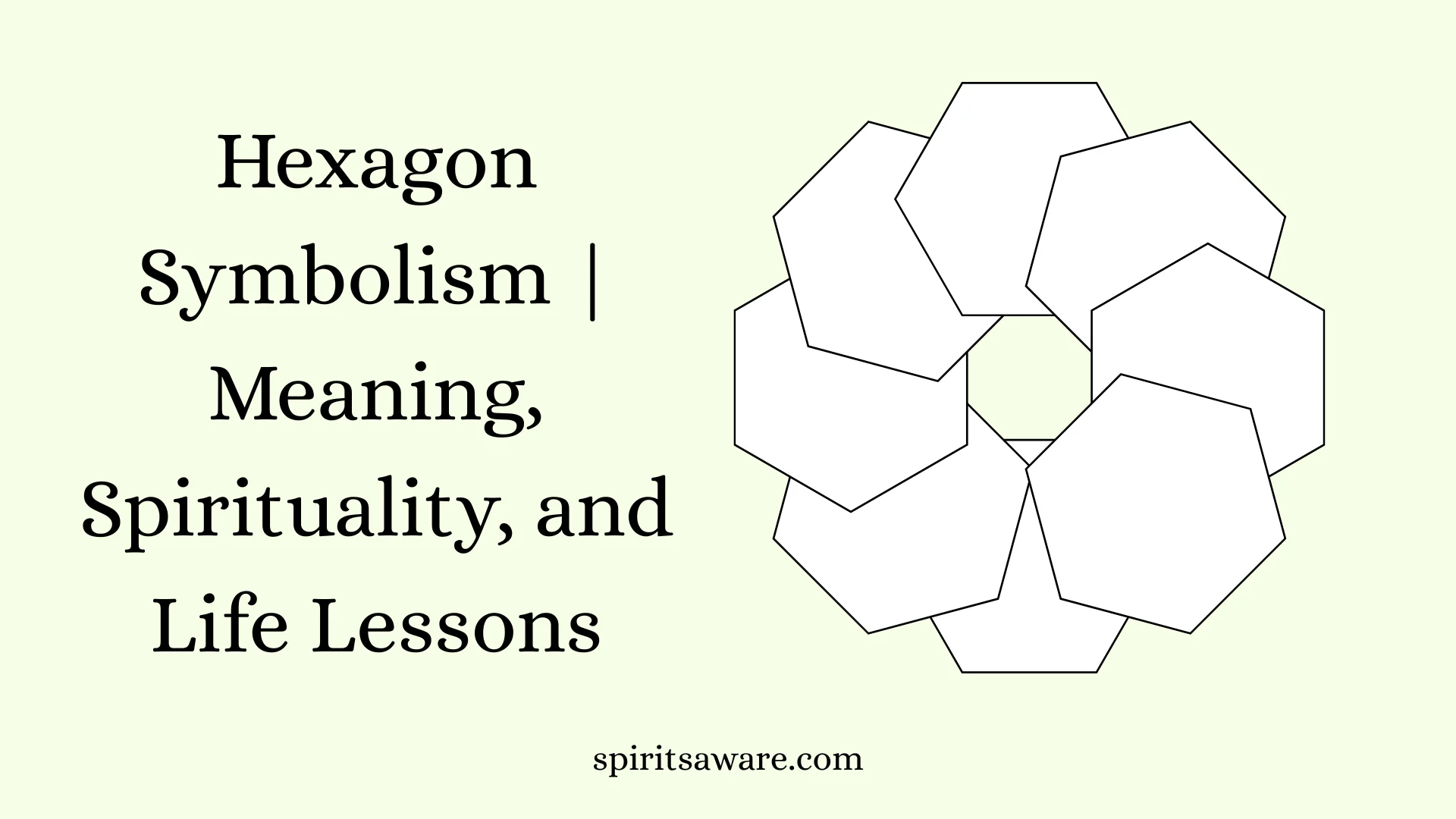
The hexagon is a simple, six-sided, geometric figure in Hexagon Symbolism showing balance, honeycombs, life, structure, and aesthetic design today.
From nature, I first saw it in honeycombs and beehive structure, and later explored its symbolism as something deeply tied to balance, harmony, and life itself. Its hexagonal form appears in tiles, floor design, and bathroom branding, giving it strong appeal across United States cultures, where it connects simple shape with deeper meaning. This shows how a geometric figure can move from nature into human design and architecture, reflecting both beauty and structure.
The power of the hexagon comes from its six sides, showing efficiency, cooperation, and natural systems. In sacred geometry, it stands for union, interconnectedness, and symmetry, often seen in snowflakes and studied through civilizations in history. This shape is used in art, architecture, and spiritual culture, bringing stability, growth, and clarity, while encouraging mindfulness and deeper observation in daily life.
In my personal experience, this symbol reflects balance, order, and the meeting of opposites in nature and spirituality. The hexagon becomes a powerful figure of integration and harmonious union, where interlocking triangles, upward-pointing triangle, and downward-pointing triangle represent Shiva, Shakti, divine masculine, and feminine energies in Shaktism and Shakta philosophy. It expresses unity in duality, deep connection, and the interplay of divine, material, and transformative powers within a wider spiritual framework.
Quick Answer
What does hexagon symbolism mean?
In the U.S. and beyond, the hexagon symbolizes balance, harmony, structure, and interconnectedness, drawing on its natural efficiency and symmetry to represent unity, cooperation, and a deeper order in life.
TL;DR
• Six equal sides → balance and harmony.
• Found in nature → efficiency, community, cooperation.
• Used in sacred geometry → unity of opposites.
• In U.S. design → trust, innovation, structure.
• Spiritual takeaway → integration of parts into a whole.
What Is the Hexagon?
The hexagon is a six‑sided polygon with internal angles of 120 degrees, and if all sides are equal, it’s called a regular hexagon. In geometry, its Greek name literally means “six angles.”
Physical and Visual Features
• Six equal sides and symmetrical form.
• Can tessellate—fit together without gaps.
• Appears naturally in snowflakes, crystals, and honeycombs.
This shape’s visual harmony makes it pleasing to the eye and powerful as a symbolic tool in art and design.
A Brief History of Hexagon Symbolism
Across time and cultures, people have noticed how the hexagon appears in nature and built objects. Its widespread presence led many ancient peoples to assign symbolic meaning to it.
Nature and Ancient Observation
In nature, bees construct honeycomb cells in a hexagonal pattern because it fills space efficiently with the least material. Snowflakes also tend to form hexagonal shapes due to molecular structures influenced by water’s properties.
Ancient architects used hexagonal motifs in mosaics, temple floors, and mosaics, often connecting the shape to cosmic order and harmony. In some traditions, hexagon shapes were woven into sacred patterns that link the human experience to universal balance.
Symbolism in the United States
In the U.S., the hexagon doesn’t hold one singular religious meaning. Instead, it’s widely used as a symbol of balance, community, and structure in many contexts:
Design & Branding
• Corporate logos often use hexagons to suggest stability and cooperation.
• Tech and innovation brands favor the shape to evoke networks and efficiency.
Everyday Objects
• Honeycomb patterns in décor reflect nature’s wisdom and efficiency.
• Hexagonal tiles in homes communicate order and harmony.
Community & Cooperation
Because hexagons interlock seamlessly—just like bees building a hive—they symbolize collaboration and shared effort. This resonates in U.S. cultural settings that value teamwork and collective progress.
Core Meanings of the Hexagon
Here’s a closer look at what the hexagon symbolizes, especially in modern U.S. context:
Balance & Harmony
The six equal sides suggest equilibrium—each part equal to the whole. This connects to ideas about balancing work, relationships, and personal growth.
Unity & Interconnectedness
Like natural hexagonal patterns that fit tightly together, this shape implies things are connected and interdependent.
Structure & Efficiency
The hexagon reflects intelligent, practical design—secure, efficient, and purposeful in how it fills space.
Order in Complexity
Seen in sacred geometry, the hexagon represents cosmic coherence—a pattern underlying physical and spiritual life.
Cross‑Cultural and Spiritual Perspectives
While the hexagon as a pure shape isn’t tied to one religion, many traditions use it in meaningful ways:
Sacred Geometry
In spiritual art and mystical traditions, the hexagon represents the union of spiritual and material realities and reflects harmony in creation.
Architectural Motifs
Patterns involving hexagons appear in Islamic tile work and Gothic motifs that symbolize purity or harmony in creation.
Folk Symbols
In folk traditions across Europe, hexafoil patterns served as protective motifs on homes or gravestones, believed to guard against negative forces.
Emotional and Psychological Associations
Psychologically, the hexagon can evoke:
• A feeling of stability and calm due to even symmetry.
• A sense of belonging or support—like pieces fitting into a larger pattern.
• A reflection on efficiency and purposeful design.
For many people, it suggests that different parts of life can be balanced and interconnected.
Modern Usage in America
Tattoos
Hexagons often show up in tattoos to symbolize balance, efficiency, and interconnected life components.
Social Media Graphics
On platforms like Instagram and Pinterest, hexagon patterns are popular in mood boards and spiritual art, conveying harmony and design balance.
Home & Fashion
Hexagonal shapes are trending in interior design, jewelry, and accessories to suggest structure and visual harmony.
Misunderstandings and Controversies
Unlike some symbols with heavy political or religious baggage, the plain hexagon is rarely controversial by itself. Where conflicts can arise is when hexagonal patterns intersect with other symbolic systems that carry specific meanings (like when combined with stars or occult symbols). It’s important to separate the pure geometric shape from those layered cultural meanings.
Changing Interpretations Over Time
Over centuries, the hexagon moved from being a structural and decorative pattern to a metaphoric symbol of harmony and efficiency. In ancient times it often was tied to cosmic order and religious art. Today it’s widely understood as a sign of balance in personal and social life, and its meanings keep evolving as digital art, spirituality, and design trends interact.
Read More: Reindeer Symbolism: Strength, Guidance & Spiritual Meaning
Symbolism at a Glance
| Context | Meaning in the USA | Common Associations | Notes |
| Nature (honeycomb) | Efficiency & cooperation | Bees, networks | Practical, real-world metaphor. |
| Design & branding | Stability & unity | Logos, architecture | Used to suggest trust. |
| Sacred geometry | Harmony & balance | Spiritual art | Less mainstream but influential. |
| Tattoos | Personal balance & growth | Body art | Reflects life integration. |
| Folk motifs | Protection & tradition | Hexafoil designs | Historic protective symbols. |
FAQs
1. What does Hexagon Symbolism represent
Hexagon Symbolism represents balance, harmony, and interconnectedness. It shows how structure and nature work together in a stable and meaningful way.
2. Why is the hexagon important in nature?
The hexagon appears in honeycombs, snowflakes, and other natural systems, showing efficiency, cooperation, and perfect geometric design in nature.
3. What is the spiritual meaning of a hexagon?
Spiritually, the hexagon reflects sacred geometry, unity, and cosmic order, often linked with balance, mindfulness, and inner growth.
4. How is the hexagon used in culture and design
It is widely used in architecture, art, tiles, and floor design, where its hexagonal shape adds aesthetic appeal and strong visual structure.
5. What does the hexagon symbolize in personal life?
In personal reflection, it represents stability, clarity, and harmony between opposites, helping people align with life balance and deeper understanding.
Conclusion
The hexagon brings together balance, harmony, and structure in a way that connects nature, art, and spirituality. Its presence in honeycombs, design, and sacred geometry shows how a simple geometric shape can carry deep meaning across cultures and life experiences. It reflects efficiency, cooperation, and the natural order found in systems that exist all around us.
On a deeper level, Hexagon Symbolism encourages mindfulness, clarity, and awareness of interconnectedness in everyday life. It reminds us that balance is not just visual but also internal, shaping how we understand growth, stability, and personal insight.
Ultimately, the hexagon stands as a powerful symbol of unity, showing how opposites, structure, and nature itself can come together in one harmonious form.

Hannah Collins is the voice behind Spirits Aware, sharing thoughtful perspectives on spiritual growth, awareness, and conscious living.