Vampires have haunted stories for centuries. Yet they’re more than monsters in capes. Vampire Symbolism: Meaning, Myth, Dreams, Tattoos & Modern Culture explores how this figure represents fear, power, desire, and even transformation—especially in the United States.
In America today, vampires show up everywhere. They appear in movies, Halloween decor, fashion, and tattoos. Some people see them as dark and dangerous. Others view them as romantic outsiders. Because of this, vampire symbolism has become layered and complex.
So what does the vampire truly mean? To answer that, we need to look at its history, psychology, and shifting role in modern culture.
Quick Answer
In the United States, Vampire Symbolism: Meaning, Myth, Dreams, Tattoos & Modern Culture centers on immortality, forbidden desire, and the fear of losing control. More broadly, vampires symbolize life force, temptation, and the shadow side of human nature.
TL;DR
• Vampires symbolize immortality and forbidden desire.
• In the USA, they mix horror and romance.
• Ancient myths shaped early vampire fears.
• Dreams about vampires reflect emotional drain.
• Tattoos often signal power or outsider identity.
• Meanings shifted from monster to antihero.
What Is a Vampire? Description and Core Traits
Before exploring meaning, it helps to understand how vampires appear in popular imagination. For American readers, this image often comes from movies and television.
Physical Appearance and Symbols
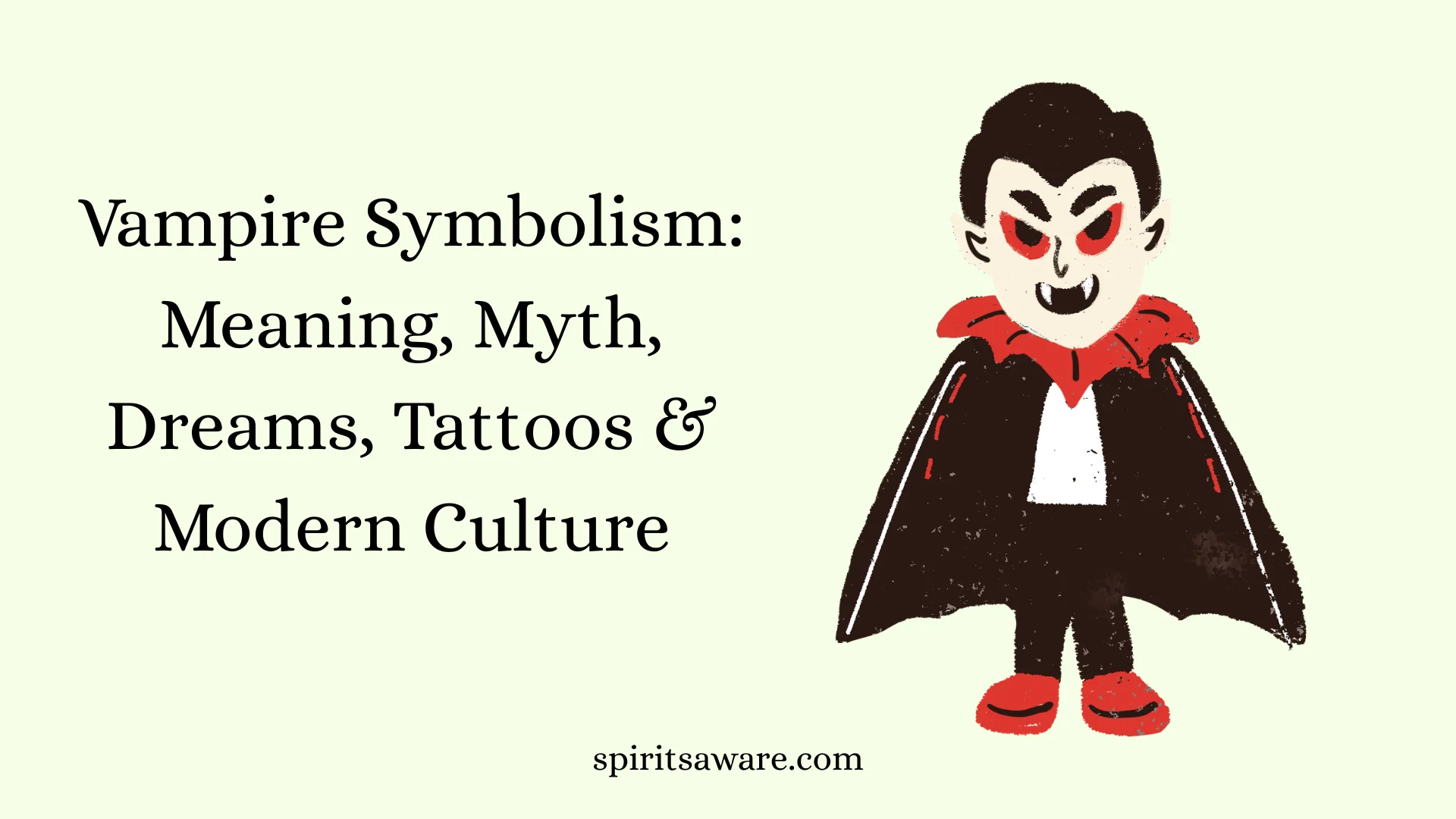
Traditionally, a vampire is a pale, human-like figure. It often has sharp fangs, glowing eyes, and an aversion to sunlight. In classic depictions, it wears dark or Victorian-style clothing.
Common visual symbols include:
• Fangs dripping with blood
• A black cape or formal coat
• A coffin or crypt setting
• Bats or wolves nearby
• A red or full moon backdrop
• A silver cross or garlic as protection
Because of these details, the vampire blends elegance with danger. It looks human, yet it signals something unnatural.
Core Meanings at a Glance
At its simplest, vampire symbolism often points to:
• Immortality and eternal youth
• Seduction and forbidden desire
• Predatory power or control
• Fear of death and decay
• Emotional or spiritual “draining”
In the United States, these themes are shaped strongly by film and literature.
Historical Origins of Vampire Myths
To understand modern meaning, we must go back centuries. The vampire did not begin in Hollywood.
Ancient and Pre-Christian Roots
Long before the word “vampire,” many cultures feared restless spirits. In parts of Eastern Europe, villagers believed the dead could rise to harm the living. However, similar ideas appeared in ancient Mesopotamia and Greece.
These early figures symbolized:
• Fear of disease spreading through communities
• Anxiety about improper burial rites
• The mystery of blood as life force
• Worries about moral corruption after death
Because blood was seen as sacred and powerful, creatures that drank it became deeply symbolic.
The Rise of the Gothic Vampire
In the 1700s and 1800s, European folklore spread westward. By the late 19th century, writers shaped the modern image of the aristocratic vampire. This figure was charming, intelligent, and deadly.
As these stories reached America, they blended with local fears and fascinations. Soon, the vampire became part of American horror culture.
Vampire Symbolism in the United States
In the USA, the vampire evolved into something unique. It reflects both national fears and fantasies.
From Monster to Cultural Icon
During the 20th century, American films turned vampires into horror villains. They symbolized:
• Fear of outsiders or invasion
• Anxiety about sexuality
• Moral panic around temptation
• The threat of losing personal freedom
However, by the late 20th and early 21st centuries, the tone changed. Vampires became romantic leads and misunderstood antiheroes.
American Context Table
| Context | Meaning in the USA | Common Associations | Notes |
| Horror Films | Fear of death and invasion | Darkness, coffins | Early 1900s–1970s focus |
| Teen Romance | Forbidden love | Eternal youth | Popular 2000s shift |
| Halloween | Playful fear | Costumes, fangs | Mainstream seasonal symbol |
| Goth Subculture | Outsider identity | Black clothing | Linked to alternative scenes |
| Social Media | Aesthetic mood | Dark glamour | Visual trend use |
Today, the vampire is both feared and admired.
Spiritual Meaning of Vampires
Although vampires are not part of mainstream religion, they carry spiritual symbolism.
Life Force and Energy
Because vampires drink blood, they are linked to life force. Blood has symbolized vitality across cultures.
Spiritually, vampires may represent:
• Energy exchange between people
• Spiritual emptiness or hunger
• Temptation that weakens the soul
• The shadow side of desire
However, interpretations vary widely. Most Americans view vampires as fictional rather than spiritual beings.
Vampire Symbolism in Dreams
Many people search for dream meanings involving vampires. These dreams often feel intense.
Common Dream Interpretations
In dreams, vampires usually symbolize emotional or psychological themes rather than literal danger.
They may reflect:
• Feeling drained by someone
• Fear of betrayal
• Hidden desires
• Anxiety about aging
• Loss of control
For example, dreaming of being bitten may suggest vulnerability. Meanwhile, becoming a vampire might signal a desire for power or change.
Psychological Meaning: The Shadow Self
Psychologists often see vampires as symbols of the “shadow self.” This term refers to parts of ourselves we hide.
What the Vampire Represents Internally
In American culture, vampires can stand for:
• Repressed desires
• Unacknowledged anger
• Fear of intimacy
• Attraction to danger
• The wish to escape mortality
Because the vampire lives forever, it also reflects our deep fear of death—and our deep wish to overcome it.
Vampire Tattoos: Meaning and Identity
Vampire tattoos are popular in the USA. They appear in gothic, horror, and fantasy styles.
Why People Choose Vampire Tattoos
For many, the tattoo is about identity. It may express:
• Personal resilience after hardship
• Embracing one’s dark side
• Love of gothic culture
• Attraction to mystery and seduction
• Rejection of mainstream norms
Importantly, tattoo meaning is personal. One person’s vampire symbolizes pain. Another’s represents power.
Vampires in Modern American Media
Modern media reshaped vampire symbolism in big ways.
From Horror to Romance
In early films, vampires were villains. Later, they became tragic heroes. This shift changed public perception.
Now, vampires often symbolize:
• The lonely outsider
• Eternal teenage angst
• Dangerous but irresistible love
• Moral struggle with inner darkness
Because of streaming shows and online fandoms, the vampire feels more relatable than ever.
Halloween and Seasonal Symbolism
Every October, vampires reappear in full force. In the United States, Halloween plays a major role.
Halloween Associations
During Halloween, the vampire represents playful fear rather than deep horror.
Common seasonal meanings include:
• Safe exploration of scary themes 🎃
• Dress-up and transformation
• Dark glamour aesthetic
• Nostalgia for classic monsters
Because of this, the vampire is both spooky and fun.
Cross-Cultural Perspectives
Although America shaped the modern vampire image, other cultures hold related beliefs.
Global Variations
Different regions describe blood-drinking spirits differently. However, shared themes include:
• Fear of the restless dead
• Protection rituals against evil
• Respect for burial traditions
• Symbolic warnings about excess
Today, American portrayals often blend these traditions into one universal archetype.
Misunderstandings and Controversies
Like many symbols, the vampire has faced controversy.
Moral Panic and Cultural Fear
In some periods, vampire stories sparked moral concern. Critics worried about:
• Sexualized themes in youth media
• Glorification of violence
• Obsession with immortality
However, most scholars agree vampires are symbolic figures. They reflect social anxieties rather than promote harm.
There are also small communities who identify with “vampire lifestyles.” These groups often focus on aesthetics or roleplay. It’s important to separate fictional symbolism from real-life health claims.
Read More: Symbolism of Snake – Spiritual, Cultural, and Mythological Meanings
How Vampire Symbolism Has Shifted Over Time
The vampire of 2026 is not the vampire of 1820.
Major Shifts
Over time, meanings changed dramatically:
• From diseased corpse to elegant aristocrat
• From villain to romantic hero
• From horror icon to fashion aesthetic
• From feared outsider to relatable antihero
Today, the vampire often represents complexity rather than pure evil.
FAQs
What does a vampire symbolize spiritually?
Spiritually, a vampire can represent energy drain, temptation, or the shadow self. In the USA, it’s mostly symbolic rather than religious.
Are vampires a symbol of immortality?
Yes. Vampires strongly symbolize eternal life and youth. However, that immortality often comes with loneliness.
What does dreaming about vampires mean?
It often suggests feeling emotionally drained or facing hidden fears. Context in the dream matters most.
Is a vampire tattoo negative?
Not necessarily. Many people see it as a symbol of strength, mystery, or personal transformation.
Why are vampires romanticized in America?
Modern media reshaped them into complex characters. As a result, they reflect desire and emotional depth.
Do vampires symbolize evil?
Historically, yes. However, modern interpretations are more nuanced and less strictly moral.
Conclusion:
Vampires have traveled a long road—from ancient fears of the restless dead to modern symbols of romance and rebellion. In the United States, they reflect our tension between fear and fascination, danger and desire.
Ultimately, Vampire Symbolism: Meaning, Myth, Dreams, Tattoos & Modern Culture reveals more about us than about monsters. The vampire holds a mirror to our hidden cravings, our fear of death, and our wish to live forever.
Next time you see fangs under a red moon, consider what they represent. You might discover they’re less about horror—and more about the human heart.