We often hear the terms symbolism and allegory used like they mean the same thing. However, they are not identical. Both add deeper meaning to stories, art, and even everyday speech. Yet they work in very different ways.
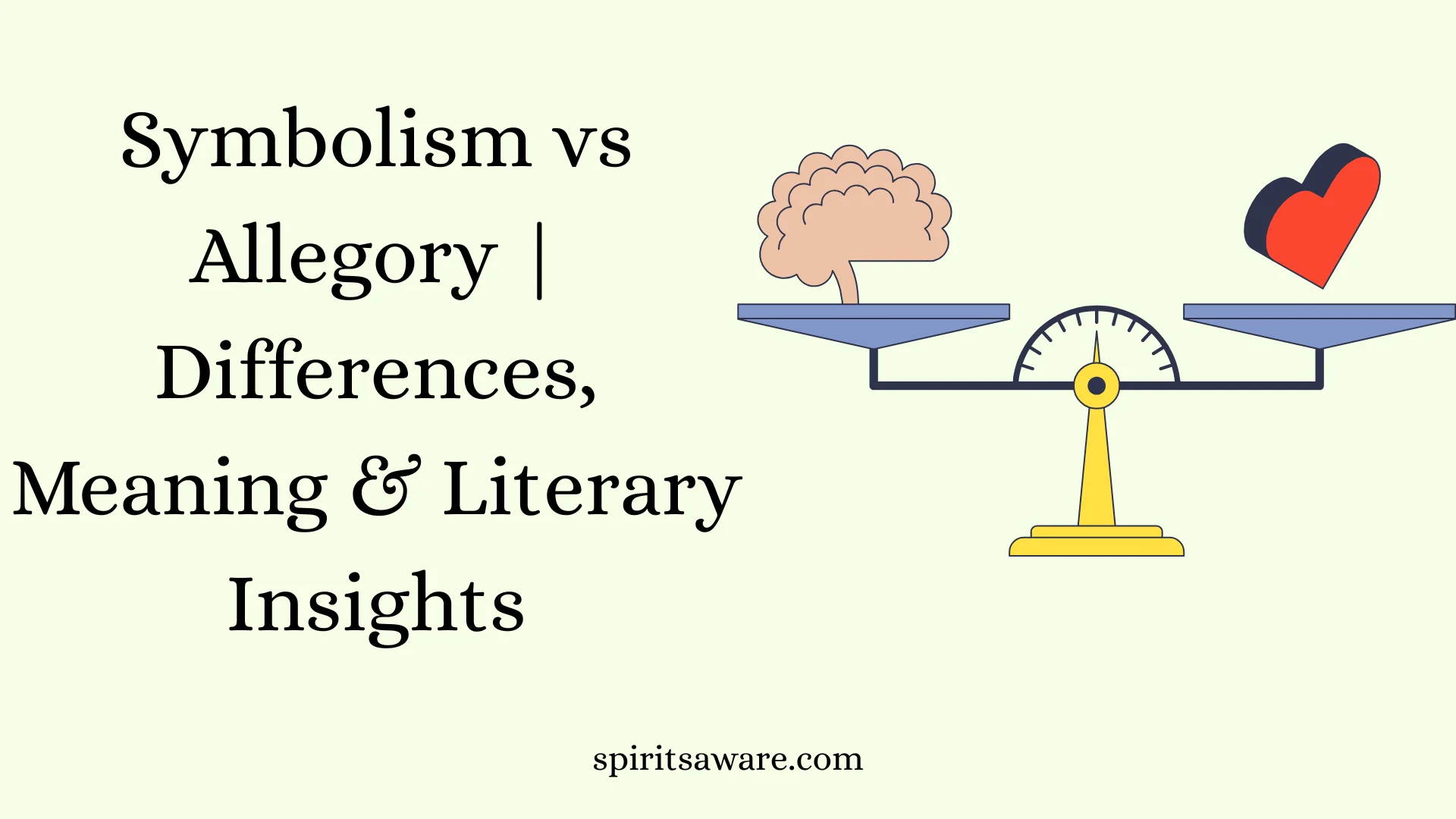
Understanding Symbolism vs Allegory | Differences, Meaning & Literary Insights helps us read books more clearly. It also helps us see how American culture uses hidden meaning in films, speeches, and social media.
Because both techniques shape how we interpret stories, knowing the difference can change how you read everything from classic novels to modern movies.
Quick Answer
Symbolism vs Allegory | Differences, Meaning & Literary Insights comes down to scale and structure. In the United States, symbolism usually means a single image or object representing a deeper idea, while allegory is a full story in which nearly every character and event stands for something else. Symbolism hints. Allegory builds a coded parallel narrative.
TL;DR
• Symbolism uses single images to suggest deeper meaning.
• Allegory is a whole story with layered hidden meanings.
• Both appear in American literature and film.
• Allegory is more structured and consistent than symbolism.
• Meanings can shift across time and culture.
What Is Symbolism?
To understand the difference, we first need clear definitions. In American classrooms, symbolism is introduced early because it appears in nearly every story.
Definition and Basic Idea
Symbolism happens when a word, object, color, or action stands for something beyond its literal meaning. The symbol remains itself, but it also carries extra meaning.
For example:
• A rose often symbolizes love or beauty.
• A storm may symbolize emotional conflict.
• A broken mirror can symbolize bad luck or shattered identity.
• Light frequently represents hope or truth.
Importantly, a symbol does not control the whole story. It adds depth, but the narrative can still stand on its own.
How Symbolism Feels to the Reader
Symbolism invites interpretation. Because symbols are open-ended, readers may see slightly different meanings.
In American literature, authors like Nathaniel Hawthorne and F. Scott Fitzgerald used symbols to add emotional layers without turning their novels into coded puzzles.
Readers often discover symbolism gradually. It feels like uncovering a hidden layer rather than decoding a system.
What Is Allegory?
Allegory works on a much larger scale. Instead of one symbol here and there, the entire narrative operates on two levels.
Definition and Structure
An allegory is a story in which characters, settings, and events consistently represent abstract ideas or real-world issues.
For example, in Animal Farm, the farm animals are not just animals. They represent political figures and systems. The story mirrors historical events.
Key traits of allegory include:
• Nearly every major character represents an idea.
• The plot parallels real historical or moral conflicts.
• The meaning is intentional and structured.
• The story operates as a sustained metaphor.
Unlike symbolism, allegory leaves fewer loose threads. Its hidden meaning is systematic.
Allegory in Religious and Moral Traditions
Allegory has deep roots in religious storytelling. For instance, The Pilgrim’s Progress presents characters like “Christian” and “Faithful” as living embodiments of spiritual qualities.
Because of this structure, allegory often feels more instructional than symbolic fiction.
Key Differences Between Symbolism and Allegory
For American readers, the difference often becomes clear when comparing scope and intention.
Side-by-Side Comparison
| Feature | Symbolism | Allegory |
| Scale | Small, specific elements | Entire narrative structure |
| Flexibility | Open to interpretation | More fixed and deliberate |
| Frequency | Common in most literature | Less common, more specialized |
| Reader Experience | Suggestive and subtle | Structured and parallel |
| Example | Green light in The Great Gatsby | Political system in Animal Farm |
Because symbolism is more flexible, it appears more often in modern American novels and films.
Historical Roots of Symbolism
Symbolism is ancient. Humans have always used objects to stand for larger ideas.
Ancient and Pre-Christian Uses
Long before modern literature, symbols appeared in myths and rituals:
• The sun symbolized life and divine power.
• The serpent symbolized wisdom or danger.
• Water symbolized cleansing or rebirth.
• Trees symbolized growth and connection.
In ancient Greece, philosophers like Plato explored symbolic storytelling, especially in myths.
Because symbols are flexible, they survived across cultures and religions.
Historical Roots of Allegory
Allegory also has ancient roots, but it developed differently.
Classical and Medieval Allegory
Writers in ancient Greece and Rome used allegory to explain moral ideas. Later, medieval Christian writers expanded it.
For example, The Divine Comedy presents a journey through Hell, Purgatory, and Heaven. On the surface, it’s an adventure. Underneath, it represents the soul’s spiritual path.
Because allegory allowed writers to teach moral lessons safely, it became popular in politically restricted eras.
Symbolism in American Literature
In the United States, symbolism flourished in the 19th and 20th centuries.
American Literary Examples
American authors often prefer symbolism over allegory because it feels more natural.
• The green light in The Great Gatsby symbolizes unreachable dreams.
• The scarlet letter in The Scarlet Letter symbolizes sin and shame.
• The white whale in Moby-Dick symbolizes obsession and fate.
• The mockingbird in To Kill a Mockingbird symbolizes innocence.
These novels are not full allegories. Instead, they use powerful symbols to deepen themes.
Allegory in American Culture
Although less common, allegory still appears in American storytelling.
Political and Social Allegory
Allegory often shows up in times of tension.
For instance:
• Dystopian novels reflect political anxieties.
• Animated films sometimes critique society indirectly.
• Fantasy worlds mirror real-world power struggles.
• Satirical stories disguise commentary as fiction.
Because allegory can hide criticism, it remains a useful creative tool.
Emotional and Psychological Impact
Both symbolism and allegory affect readers emotionally.
Why Symbolism Feels Personal
Symbols tap into shared human experiences. A candle in darkness feels hopeful without explanation.
Psychologically, symbols work through association. They connect with memory and emotion.
Why Allegory Feels Intellectual
Allegory often feels like solving a puzzle. Readers decode parallels and compare layers.
As a result:
• Symbolism sparks intuition.
• Allegory encourages analysis.
• Symbolism feels subtle.
• Allegory feels deliberate.
Both can be powerful, but they engage the brain differently.
Symbolism vs Allegory in Film and Media
Modern American media uses both techniques constantly.
Film and Pop Culture
In film:
• A recurring color scheme can symbolize mood.
• A superhero may symbolize justice or fear.
• A dystopian world may function as allegory.
• A monster may represent social anxiety.
Because visual media relies heavily on imagery, symbolism dominates. Allegory appears when the entire plot mirrors real events.
Common Misunderstandings
Many students confuse symbolism and allegory.
Frequent Confusions
• Thinking every symbol creates allegory.
• Assuming allegory allows unlimited interpretation.
• Believing allegory is outdated.
• Treating symbolism as accidental.
However, symbolism can be intentional or intuitive. Allegory is always intentional and structured.
Shifts in Meaning Over Time
Meanings evolve with culture.
In early America, allegory was common in religious writing. Later, realism and modernism favored symbolism.
Today, symbolism is often subtle and layered. Allegory appears more in satire and dystopian fiction.
Because audiences value complexity, symbolism feels more modern. Allegory can sometimes seem heavy-handed, though it still thrives in certain genres.
Symbolism, Allegory, and Identity in the USA
In contemporary America, people use symbolic language daily.
Everyday Symbolic Thinking
• Wedding rings symbolize commitment.
• Flags symbolize national identity.
• Rainbows symbolize pride and inclusion.
• Broken chains symbolize freedom.
While these are symbols, not allegories, they show how Americans think symbolically.
Allegory, in contrast, shapes larger cultural narratives. Entire fictional worlds can represent debates about power, freedom, or justice.
Read More: Stag Beetle Symbolism: Strength, Transformation & Protection
FAQs
What is the main difference between symbolism and allegory?
Symbolism uses individual elements to suggest meaning. Allegory builds a full parallel story where most elements represent something else.
Can a story have both symbolism and allegory?
Yes. Many allegories also contain smaller symbols. However, not all symbolic stories are allegories.
Is allegory always political?
No. Allegory can be moral, religious, or philosophical. Politics is just one common use.
Why is symbolism more common today?
Modern audiences prefer subtle meaning. Symbolism allows depth without strict structure.
Is allegory outdated?
Not at all. It appears often in satire and dystopian fiction, especially during social tension.
Conclusion
Understanding Symbolism vs Allegory | Differences, Meaning & Literary Insights helps us read more thoughtfully. Symbolism works through suggestion, using images and objects to deepen emotion. Allegory builds an entire parallel structure, where nearly everything stands for something else.
In American culture, symbolism appears more frequently because it feels flexible and personal. Allegory remains powerful when writers want to critique society or teach moral lessons.
When you notice a repeated image or a structured parallel world, pause and ask: is this symbolism, allegory, or both? That simple question can transform how you experience stories.

Amelia Brooks is the visionary behind Spirits Aware, dedicated to guiding others on their journey of spiritual awakening and conscious living. Through insight, intuition, and experience, she shares empowering wisdom to help you reconnect with your inner truth.