Roses are everywhere. We give them on Valentine’s Day, plant them in gardens, and ink them into tattoos. Yet most people pause at some point and ask what they truly mean. The Symbolism of a Rose: Love, Beauty, and Spiritual Meaning goes far beyond romance cards and flower shops.
In the United States, the rose stands for love above all else. However, it also carries ideas of sacrifice, purity, secrecy, and even strength through pain. Because it appears in religion, literature, and pop culture, its meaning keeps evolving.
Today, the rose is both deeply traditional and surprisingly modern. To understand why it still matters in 2025–2026, we need to look at where it came from and how Americans interpret it now.
Quick Answer
The Symbolism of a Rose: Love, Beauty, and Spiritual Meaning centers on love in American culture, especially romantic devotion. However, roses also symbolize beauty, spiritual growth, sacrifice, and the balance between pleasure and pain. Across history, they’ve represented both earthly desire and sacred devotion.
TL;DR
• In the USA, roses mostly symbolize romantic love.
• Red roses mean passion and deep commitment.
• Thorns represent pain, sacrifice, or protection.
• Spiritually, roses can symbolize purity and divine love.
• Today, roses appear in tattoos, holidays, and social media.
What Is a Rose and How Does It Appear as a Symbol?
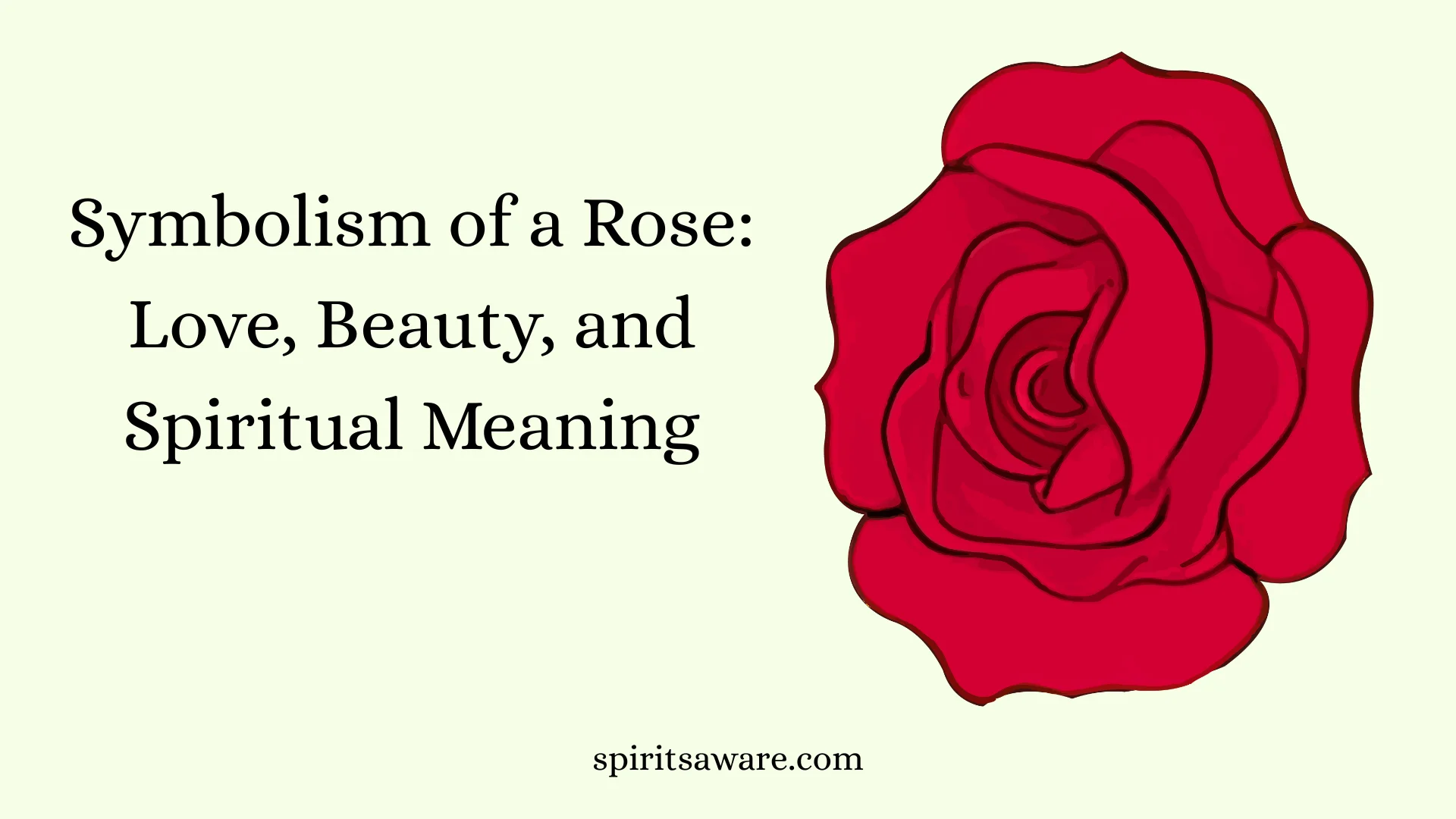
Before we explore meaning, it helps to picture the symbol itself. A rose is a layered flower with soft petals arranged in a circular pattern. It grows on thorned stems and comes in many colors.
Physical Features That Shape Its Meaning
The rose’s design influences its symbolism:
• Layered petals suggest depth and unfolding truth
• Fragrance symbolizes attraction and emotional pull
• Thorns represent pain, protection, or sacrifice
• Circular bloom reflects wholeness and eternity
Because it’s both beautiful and sharp, the rose naturally symbolizes the mix of joy and struggle in love.
Common Rose Colors and Their Meanings
In the United States, color plays a huge role in interpretation.
• Red – romantic love and passion
• White – purity, remembrance, and weddings
• Pink – admiration and gentle affection
• Yellow – friendship and joy
• Black (dyed) – mourning or rebellion
Over time, florists and greeting card companies reinforced these meanings. As a result, Americans often read color as emotional code.
Historical Roots of Rose Symbolism
The rose did not begin as a Valentine’s Day flower. Its story stretches back thousands of years, long before modern America existed.
Ancient Greece and Rome
In ancient Greece, roses were linked to Aphrodite, the goddess of love. According to myth, red roses grew from her tears and the blood of her lover. Similarly, in Rome, the rose was sacred to Venus.
Because of this, roses symbolized:
• Desire and romantic passion
• Beauty and physical attraction
• The fleeting nature of life
Romans also used roses at banquets and funerals, blending pleasure with mortality.
Sub Rosa: The Secret Meaning
In Roman culture, a rose hung from the ceiling meant secrecy. The Latin phrase sub rosa means “under the rose.” Conversations held beneath it were private.
Even today, the rose can symbolize confidentiality or hidden truth.
Roses in Christian and Medieval Symbolism
As Christianity spread, rose symbolism shifted. Instead of pagan love stories, the flower gained spiritual meaning.
The Rose and the Virgin Mary
In medieval Europe, the white rose became associated with Virgin Mary. It symbolized purity and divine grace. The red rose later represented Christ’s sacrifice.
Because of this shift:
• White roses symbolized spiritual innocence
• Red roses symbolized martyrdom and sacred love
• Rose gardens represented paradise
The rosary itself takes its name from the rose, linking prayer and petals.
Symbolism of a Rose in American Culture
In the United States, the rose blends romance, patriotism, and everyday emotion. It is the national flower of the country.
The Rose as America’s National Flower
In 1986, President Ronald Reagan signed legislation making the rose the national floral emblem. This elevated it from garden plant to cultural symbol.
In American life, roses appear in:
• Valentine’s Day celebrations
• Mother’s Day bouquets
• Memorial services
• Wedding ceremonies
Because these events mark life’s milestones, the rose symbolizes emotional importance.
Spiritual Meaning of a Rose
Beyond romance, roses often carry spiritual symbolism. Many people see them as signs of growth and awakening.
Spiritual Themes
• Divine love and higher connection
• The soul unfolding like petals
• Transformation through life’s challenges
• Beauty emerging from struggle
In some modern spiritual practices, roses represent heart-centered energy. Their shape resembles a mandala, suggesting inner harmony.
Emotional and Psychological Associations
Psychologically, roses trigger strong responses. Their scent and appearance connect to memory and attachment.
What a Rose Signals Emotionally
• Deep affection and longing
• Appreciation and gratitude
• Vulnerability in relationships
• Courage to express feelings
However, thorns add complexity. They remind us that love can hurt. This dual meaning makes the rose emotionally powerful.
Rose Color Meanings in the USA
Color symbolism is especially strong in American culture. Florists often guide buyers based on shade.
| Context | Meaning in the USA | Common Associations | Notes |
| Red Rose | Romantic love | Passion, desire | Most popular for Valentine’s Day |
| White Rose | Purity, remembrance | Weddings, funerals | Also symbolizes new beginnings |
| Yellow Rose | Friendship | Joy, warmth | Once meant jealousy historically |
| Pink Rose | Admiration | Gratitude, sweetness | Often given to mothers |
| Orange Rose | Enthusiasm | Energy, attraction | Modern romantic gesture |
Because color carries emotional cues, choosing the “wrong” shade can send mixed signals.
Roses in Literature and Popular Culture
Roses appear often in American and European storytelling. One famous example is Romeo and Juliet by William Shakespeare. Juliet says, “A rose by any other name would smell as sweet.”
That line suggests identity is deeper than labels. In the U.S., the quote is widely taught in schools.
Roses also appear in:
• Classic love songs
• Tattoo art styles
• Film and TV romance scenes
• Poetry about beauty and loss
Because media repeats these images, the symbolism stays alive.
Roses in Tattoos and Personal Identity
Today, rose tattoos are among the most popular designs in the United States.
Why People Choose Rose Tattoos
• To honor a loved one
• To symbolize enduring love
• To show strength through hardship
• To represent beauty with resilience
Some designs include a clock or name, marking a life event. Others show a rose with thorns to represent survival.
Unlike many symbols, the rose works for all genders. It can look soft, bold, traditional, or modern.
Cross-Cultural Meanings of the Rose
Although this article focuses on the USA, rose symbolism appears worldwide.
In Persian poetry, the rose represents divine love and longing. In England, the Tudor rose symbolizes unity after conflict. In Mexico, roses often appear in religious imagery connected to Marian devotion.
Despite cultural differences, common threads remain:
• Love and devotion
• Beauty and fragility
• Spiritual longing
• Life’s temporary nature
Because these themes are universal, the rose translates easily across borders.
Misunderstandings and Controversies
While mostly positive, rose symbolism can be misunderstood.
Common Confusions
• Yellow roses once symbolized jealousy in Europe
• Black roses are usually dyed, not natural
• A single rose can mean different things by context
• Thorn imagery may suggest pain or warning
In some political contexts, roses have appeared in party logos abroad. However, in the United States, the rose remains mostly apolitical and personal.
It’s important to separate traditional meanings from isolated uses.
How Rose Symbolism Has Shifted Over Time
Meaning evolves with culture. In ancient times, roses symbolized luxury and excess. In the Middle Ages, they symbolized sacred purity. In modern America, they mostly represent romance and personal expression.
However, social media has added new layers. A rose emoji can mean flirtation, appreciation, or aesthetic beauty. Context now shapes meaning more than tradition alone.
Because culture moves fast, symbolism adapts while keeping its roots.
Why the Rose Still Matters in 2025–2026
Even in a digital world, people still give real roses. That says something important.
Roses slow us down. They require care and attention. In a time of fast messages, they signal intention.
For many Americans today, giving a rose means:
• “I see you.”
• “I value you.”
• “This moment matters.”
• “Love is worth the risk.”
That mix of beauty and bravery keeps the symbol alive.
Read More: Banyan Tree Symbolism | Spiritual, Cultural & Eternal Meanings
FAQs
What does a red rose symbolize?
In the United States, a red rose symbolizes romantic love and passion. It often expresses deep commitment or desire.
What is the spiritual meaning of a rose?
Spiritually, roses can represent divine love, purity, and personal growth. Many see them as symbols of the heart and inner awakening.
Why are roses associated with Valentine’s Day?
The connection grew from ancient links to love goddesses and later European courtship traditions. Over time, American culture made red roses the ultimate romantic gift.
Do different colored roses mean different things?
Yes. In the U.S., colors signal different emotions, from friendship to remembrance. Context also shapes interpretation.
What do rose tattoos usually mean?
Rose tattoos often represent love, resilience, or remembrance. The meaning depends on design and personal story.
Is a black rose a bad symbol?
Not necessarily. While linked to mourning or rebellion, it can also symbolize transformation or new beginnings.
Conclusion
The Symbolism of a Rose: Love, Beauty, and Spiritual Meaning reflects centuries of layered meaning. In the United States, it most strongly represents romantic love. However, it also carries ideas of sacrifice, purity, resilience, and spiritual growth.
Because the rose combines softness and thorns, it mirrors real life. Love can be joyful and painful. Beauty can be fragile and strong.
Next time you see a rose, pause for a moment. Its petals hold more history and emotion than we often realize.