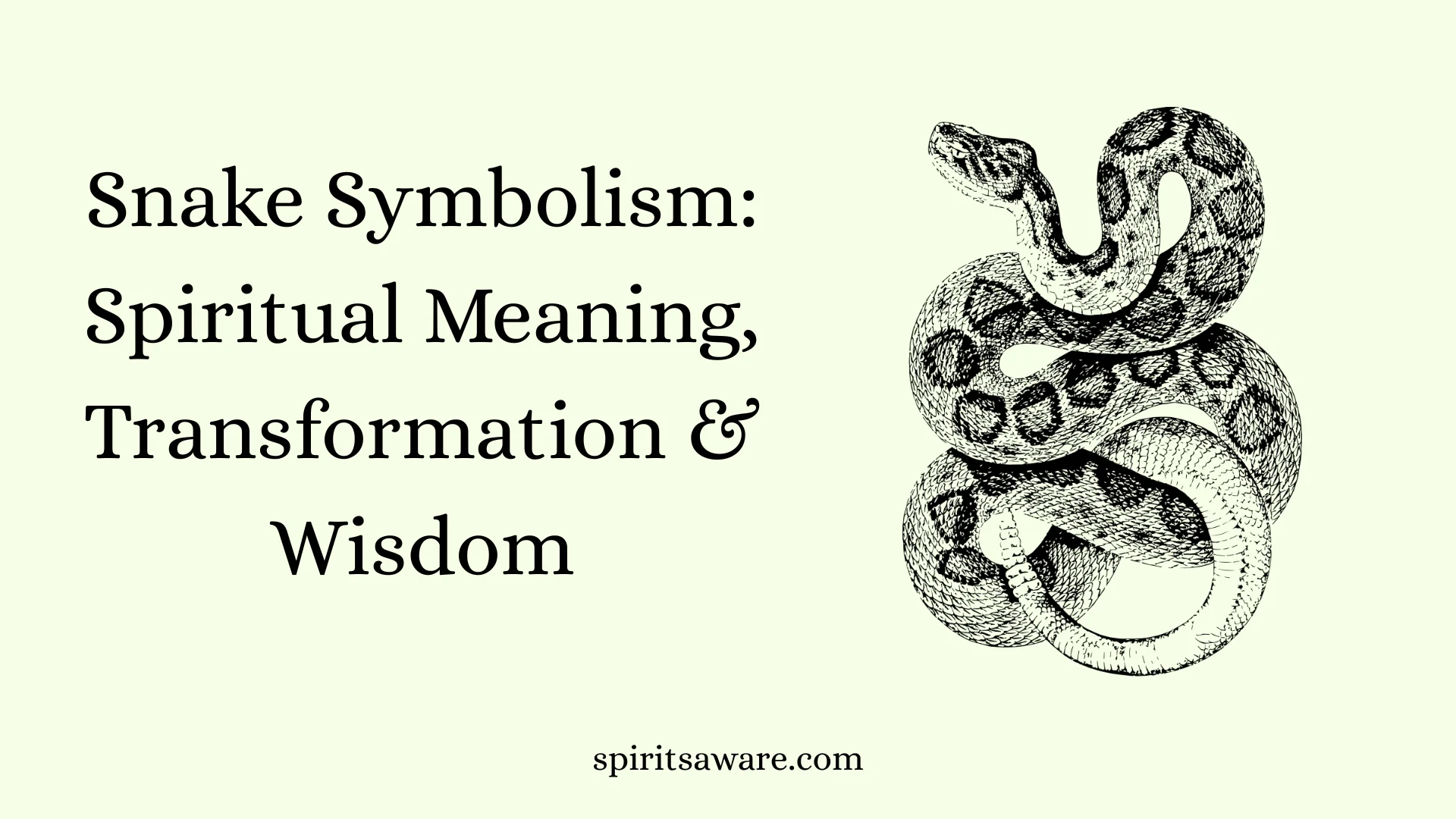
In my experience exploring mythology and cultural traditions, Snake Symbolism shows how snakes and serpents reveal dualities of life and death, danger and healing, inspiring transformation and wisdom across human history.
The symbolic nature of snakes spans religions, spiritual traditions, folklore, literature, art, and tattoos, representing temptation, fertility, immortality, sin, and hidden knowledge. Stories from the Garden of Eden, Kundalini energy, and biblical texts reveal their complex, enigmatic, and timeless significance, while their appearance evokes awe, wonderment, and fear in human experience.
In modern life, snakes continue to embody powerful symbolism in psychology, dream interpretations, jewelry, and tattoos. Observing their shedding, emerging anew, and cycles teaches transformation, renewal, protection, and wisdom, while their presence offers profound insights into the human experience, blending danger with spiritual guidance.
Quick Answer
Snake Symbolism: Spiritual Meaning, Transformation & Wisdom often represents renewal, healing, and hidden knowledge. In the United States, snakes can symbolize both freedom and danger, depending on the context. Across cultures, they frequently represent transformation because of their ability to shed their skin.
TL;DR
• Snakes often symbolize transformation, rebirth, and renewal.
• In the U.S., they can represent freedom, caution, or rebellion.
• Ancient cultures linked snakes to wisdom and sacred knowledge.
• The shedding skin represents personal growth and life cycles.
• Modern uses include tattoos, spirituality, and cultural symbols.
What Is Snake Symbolism?
Snake symbolism refers to the meanings people attach to snakes in art, religion, stories, and everyday culture. Although snakes are real animals, their symbolic meanings often go far beyond biology.
Because snakes move silently and shed their skin, people have long seen them as mysterious creatures connected to hidden knowledge or spiritual change.
Common Visual Forms
Snakes appear in many symbolic forms:
• A coiled snake representing potential power or protection
• A snake shedding skin symbolizing renewal and rebirth
• Two snakes wrapped around a staff representing medicine
• A striking snake symbolizing warning or defense
• A circular snake biting its tail representing eternity
These forms show how the same animal can symbolize different ideas depending on context.
Core Meanings of Snake Symbolism
Although interpretations vary, a few key themes appear again and again in snake symbolism.
Transformation and Renewal
Snakes shed their skin several times each year. Because of this, many cultures associate them with rebirth and life cycles.
People often view snake imagery as a reminder that personal change is natural and necessary.
Wisdom and Hidden Knowledge
Snakes often appear in stories as guardians of secrets or sacred knowledge. Their quiet movement and sharp senses reinforce this image.
Danger and Protection
At the same time, snakes can represent caution. Their venom and sudden strike make them symbols of warning or defense.
Some traditions see them as protectors that guard sacred places.
Historical Roots of Snake Symbolism
Snake symbolism stretches back thousands of years. Ancient civilizations around the world used snake imagery in religion, medicine, and mythology.
Ancient Civilizations
In many early societies, snakes were linked to life forces and healing.
• Ancient Egypt associated snakes with divine protection.
• Greek traditions connected snakes with medicine and healing.
• Mesopotamian myths linked snakes to immortality.
• Some early European cultures viewed snakes as earth spirits.
These traditions shaped how later societies interpreted snake symbolism.
Archetypal Meaning
Across cultures, snakes often represent deep psychological themes.
They symbolize cycles of life, hidden power, and transformation—ideas that appear in myths around the world.
Snake Symbolism in the United States
In American culture, snakes have both historical and modern symbolic roles.
One of the most famous examples is the rattlesnake used during the American Revolution. Colonists saw the rattlesnake as a creature that avoided conflict but defended itself fiercely when threatened.
American Cultural Associations
• Independence and resistance
• Warning before conflict
• Natural strength and resilience
• Individual freedom
These meanings still influence how many Americans interpret snake imagery today.
American Symbolism Table
| Context | Meaning in the USA | Common Associations | Notes |
| Revolutionary imagery | Freedom and independence | “Don’t Tread on Me” flag | Symbol of resistance |
| Medicine | Healing and health | Staff with snakes | Used in healthcare logos |
| Tattoos | Transformation or power | Coiled or shedding snakes | Popular modern designs |
| Nature symbolism | Respect for wild power | Rattlesnakes, desert imagery | Linked to American landscapes |
| Spiritual communities | Personal growth | Renewal, awakening | Often tied to transformation |
Spiritual Meaning of Snake Symbolism
In spiritual traditions, snakes often represent personal awakening or hidden wisdom.
Their connection to the earth and their silent movement give them an almost mystical quality.
Common Spiritual Interpretations
• Spiritual rebirth or awakening
• Life cycles and personal transformation
• Hidden knowledge or intuition
• Protection of sacred energy
• Balance between life and death
Many modern spiritual communities in the U.S. see snakes as symbols of inner change.
Snake Symbolism in Religion and Mythology
Snakes appear in many religious traditions, often carrying powerful symbolic roles.
Biblical Symbolism
In the Bible, the snake is associated with temptation and deception in the Garden of Eden story.
Because of this, some Christian interpretations see snakes primarily as symbols of danger or moral testing.
Other Religious Meanings
However, other traditions view snakes differently.
• Some Hindu traditions link snakes to cosmic energy.
• In Greek myths, snakes symbolize healing.
• Indigenous traditions sometimes see snakes as guardians of nature.
These differences show how symbolism changes depending on cultural perspective.
Psychological Meaning of Snake Symbols
Psychologically, snake imagery often represents deep emotional themes.
Because many people instinctively fear snakes, they can symbolize confronting hidden fears.
However, they can also represent growth after a difficult change.
Emotional Associations
• Personal transformation after hardship
• Facing hidden fears
• Inner wisdom emerging
• Letting go of old habits
• Strength during life transitions
In this sense, snake symbolism often reflects major life changes.
Snake Symbolism in Tattoos
Snake tattoos are very popular in the United States. Their meanings vary widely depending on style and design.
Popular Tattoo Meanings
• Personal rebirth after a life change
• Protection or strength
• Wisdom and awareness
• Independence and power
• Cycles of life and death
Design choices often influence the meaning.
For example, a snake shedding its skin may emphasize renewal, while a coiled snake might represent readiness or protection.
Snake Symbolism in Modern Culture
Snakes appear frequently in modern media and visual culture.
Movies, books, and video games often use snakes to symbolize mystery, danger, or transformation.
Common Modern Uses
• Fashion and jewelry designs
• Social media symbolism for personal change
• Logos related to medicine and healing
• Nature conservation imagery
• Spiritual and meditation imagery
Today, snake symbolism continues to evolve with new meanings.
Misunderstandings and Controversies
Because snakes appear in many religions and traditions, their meanings can sometimes be misunderstood.
For example, some people assume snakes always symbolize evil. However, historically they have represented both positive and negative ideas.
Common Misinterpretations
• Assuming snakes always represent evil
• Ignoring healing symbolism in medicine
• Confusing cultural meanings from different traditions
• Oversimplifying ancient myths
Understanding the full history helps avoid these misunderstandings.
How Snake Symbolism Has Changed Over Time
Snake symbolism has never stayed the same. Instead, its meaning has shifted as cultures changed.
Ancient societies often viewed snakes as sacred or protective.
Later religious interpretations sometimes emphasized danger or temptation.
Today, modern symbolism tends to focus more on transformation, personal growth, and wisdom.
This shift reflects how people reinterpret ancient symbols in modern life.
Read More: White Bird Symbolism | Meaning, Spiritual Lessons & Cultural Insights
FAQs
1. What does snake symbolism represent?
Snake symbolism represents transformation, rebirth, wisdom, healing, temptation, duality, and the eternal cycle of life, reflecting both danger and protection.
2. Why are snakes considered spiritual creatures?
Snakes are seen as spiritual beings because they carry hidden knowledge, connect to primal life force, and symbolize immortality, fertility, and mystical energy across cultures.
3. How is snake symbolism depicted in art and culture?
In art, literature, tattoos, and decorative designs, snakes appear as motifs showing dualities, guiding understanding, and representing complex, enigmatic, and timeless meanings.
4. What is the difference between serpents and snakes in symbolism?
While often interchangeable, serpents are typically seen as mythical or ancient symbols, whereas snakes can represent both real-life creatures and spiritual ideas in modern life.
5. How can snake symbolism apply to personal growth?
Observing snakes or reflecting on their cycles of shedding and emerging anew teaches transformation, renewal, protection, and offers insights for personal and spiritual growth.
6. Are snakes considered good or evil in symbolism?
Snakes embody duality: they can symbolize danger, sin, and chaos, but also healing, wisdom, protection, and immortality, depending on cultural or religious context.
7. What are common snakes in symbolic interpretation?
Common symbolic snakes include constrictors, venomous species, and indigenous varieties, each carrying distinct meanings, often related to power, transformation, and spiritual lessons.
8. How does snake symbolism appear in dreams?
In dreams, snakes may represent fear, temptation, hidden knowledge, transformation, or personal challenges, reflecting the psychology of the dreamer.
9. Can snake symbolism be found worldwide?
Yes, snake symbolism is universal, appearing in ancient civilizations like Egypt, Greece, India, Mesoamerica, and in modern cultures, highlighting shared spiritual themes.
10. How do snakes teach life lessons?
By observing their cycles, shedding, and emergence, snakes teach lessons of renewal, adaptation, resilience, and the balance of life, death, and spiritual growth.
Conclusion
Snake Symbolism offers a profound window into the duality of life and death, danger and healing, as well as the mystical energy that flows through human history. Across ancient civilizations and modern life, snakes and serpents have inspired wisdom, transformation, rebirth, and spiritual growth, appearing in mythology, religions, art, literature, and dreams. Observing their cycles of shedding and emerging anew provides guidance, insights, and valuable life lessons, reminding us that protection, renewal, and understanding often emerge alongside danger and temptation.