Forests have always stirred something deep inside us. In stories, dreams, and daily life, they feel both inviting and unknown. Forest Symbolism: Spiritual Meanings, Myths, and Cultural Insights explores why these wooded spaces mean so much—especially in the United States.
At first glance, a forest is simple: trees, shade, wildlife, and earth. Yet culturally and spiritually, it becomes far more. Americans see forests as places of freedom, danger, healing, and self-discovery.
Because forests cover vast parts of the U.S., from the Pacific Northwest to New England, they shape not just landscapes but identity. Understanding forest symbolism helps explain why we hike, protect, fear, and romanticize these spaces today.
Quick Answer
Forest Symbolism: Spiritual Meanings, Myths, and Cultural Insights centers on the forest as a symbol of growth, mystery, and transformation in the United States. It often represents personal journeys, hidden truths, and renewal, while globally it can also symbolize the sacred, the wild, and the unknown.
TL;DR
• Forests symbolize growth, mystery, and inner journeys.
• In the U.S., they reflect freedom and wilderness identity.
• Ancient myths linked forests to spirits and gods.
• Psychologically, forests mirror the unconscious mind.
• Today, they appear in tattoos, decor, and activism.
What Does a Forest Symbolize?
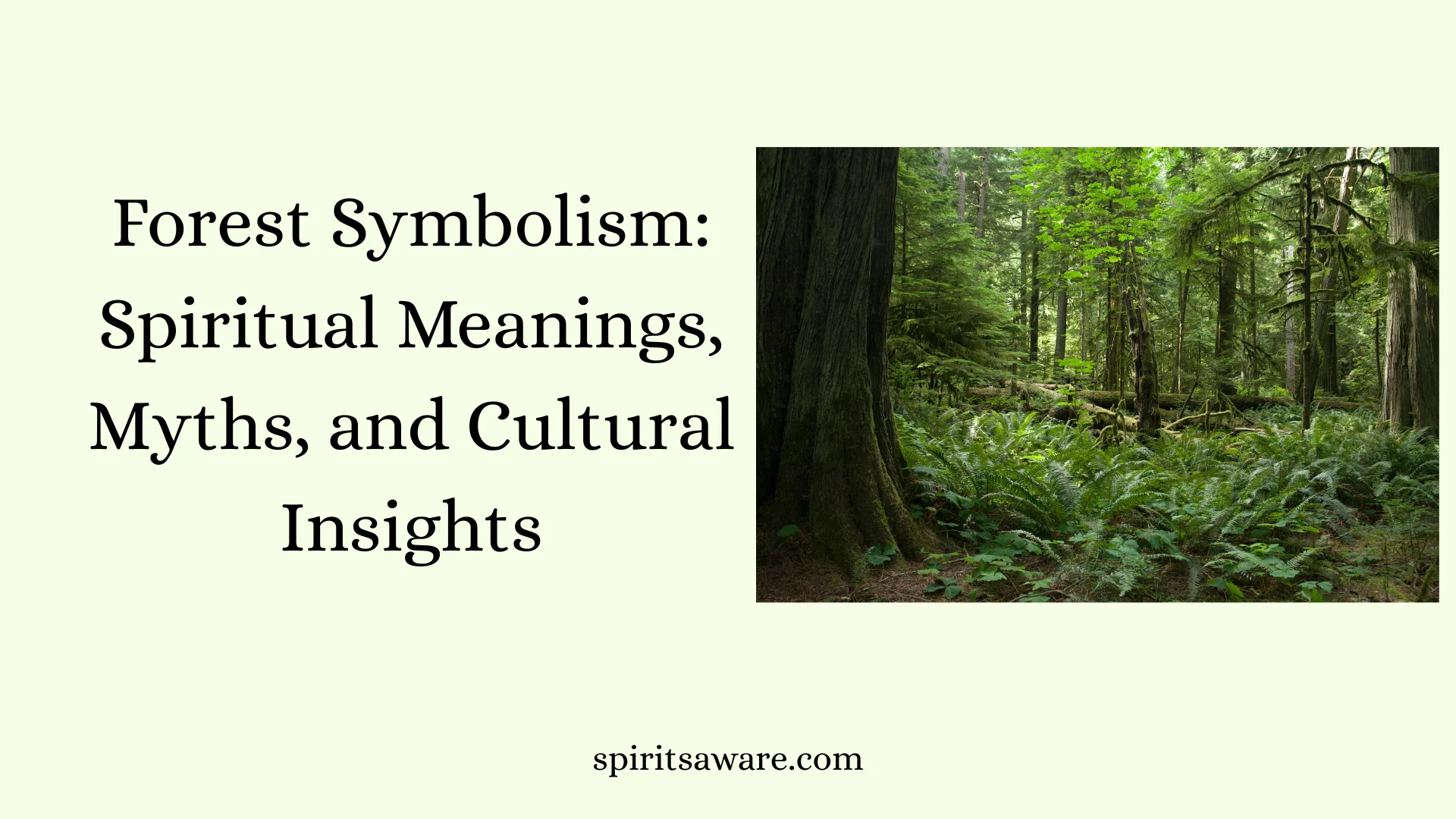
Before diving into history, it helps to define what we mean by “forest symbolism.” A forest isn’t just trees. It’s a dense, layered space that blocks sight and light. That physical experience shapes its meaning.
Visual and Physical Features
Forests usually include tall trunks, overlapping branches, filtered sunlight, and winding paths. Because they limit visibility, they create a sense of depth and uncertainty.
• Tall trees reaching upward suggest growth and ambition
• Dense shadows imply mystery or hidden knowledge
• Interwoven roots symbolize connection and ancestry
• Changing seasons reflect life cycles
In American imagery, forests often appear green and lush. However, autumn forests with orange and red leaves symbolize change and impermanence.
Core Meanings at a Glance
In the U.S. today, forests most commonly symbolize:
• Personal transformation
• Freedom and independence
• The unknown or unexplored path
Because they combine beauty and risk, forests hold both comfort and tension.
Ancient Roots of Forest Symbolism
Long before modern America, forests carried spiritual weight. Many early societies saw them as sacred spaces.
Pre-Christian Europe
In ancient Europe, forests were linked to divine forces. Celtic traditions viewed groves as sacred sites. Meanwhile, Germanic tribes believed spirits lived among the trees.
Forests were places for rituals, but also danger. Travelers feared wild animals and unseen forces.
• Sacred groves used for ceremonies
• Trees seen as bridges between earth and sky
• Woods associated with fate and prophecy
• Wilderness tied to untamed power
Classical Mythology
In Greek and Roman myth, forests belonged to gods of nature. For example, the goddess Artemis roamed wooded areas, protecting wildlife. The forest was both refuge and threat.
This dual meaning—safe yet risky—carried into later Western storytelling.
Forest Symbolism in the United States
In America, forests gained fresh meaning through history. Early settlers saw them differently than Indigenous peoples did.
Frontier and Wilderness
To European settlers, forests were obstacles to clear and conquer. Over time, however, wilderness became a symbol of strength and national character.
The American frontier story turned forests into icons of independence.
• Self-reliance and survival
• Expansion and exploration
• Rugged individualism
• National pride
Writers like Henry David Thoreau helped reshape forests as places of reflection instead of fear.
Conservation Movement
By the late 19th century, forests symbolized something else: protection. The creation of national parks changed public perception.
Because of conservation efforts, forests now represent environmental responsibility.
Forests in Native American Traditions
Across many Native American cultures, forests are not empty land. They are living relatives.
Although traditions vary by tribe, forests often symbolize balance and respect for life.
• Interconnectedness of all beings
• Sacred presence in nature
• Cycles of renewal
• Guidance through dreams
Unlike frontier narratives, many Indigenous views see the forest as teacher, not enemy.
Spiritual Meaning of Forests
Today, spiritual seekers often describe forests as healing spaces. Even outside organized religion, forests feel sacred.
Inner Journey and Awakening
Because forests are quiet and layered, they symbolize the inward path.
• Spiritual growth through solitude
• Letting go of old identities
• Facing hidden fears
• Reconnecting with nature
Retreat centers and meditation groups often choose wooded settings for this reason.
Psychological Meaning of Forest Symbolism
Psychologically, forests mirror the human mind. They represent the unconscious—deep, layered, and partly hidden.
In dreams, entering a forest often signals transition. It may suggest entering a new phase of life.
• Curiosity about the unknown
• Anxiety about uncertainty
• Desire for escape
• Longing for grounding
Because modern life feels fast and digital, forests also symbolize mental reset.
Forest Symbolism in Literature and Fairy Tales
From children’s stories to adult novels, forests shape Western storytelling.
Fairy tales often begin with someone entering the woods. That act marks the start of change.
• Testing courage and maturity
• Encountering danger or magic
• Losing innocence
• Discovering hidden strength
American films continue this pattern. Forest settings often signal transformation or survival themes.
Forest Symbolism in Tattoos and Art
In the United States, forest tattoos have grown popular. They often show pine trees in silhouette across the forearm.
Why People Choose Forest Tattoos
Forest imagery is simple yet meaningful.
• Love of hiking and outdoor life
• Tribute to home landscapes
• Reminder of personal growth
• Commitment to environmental values
Minimalist black tree lines suggest calm strength. Meanwhile, detailed designs reflect complexity.
Forest Symbolism in American Culture
Forests appear in holidays, activism, and branding. They connect to ideas of natural purity.
Cultural Context Table
| Context | Meaning in the USA | Common Associations | Notes |
| National Parks | Preservation and pride | Camping, family trips | Linked to shared identity |
| Environmental Movements | Protection and activism | Climate awareness | Symbol of responsibility |
| Outdoor Recreation | Freedom and escape | Hiking, cabins | Stress relief |
| Horror Films | Fear and isolation | Darkness, suspense | Reflects hidden danger |
| Home Decor | Calm and grounding | Rustic style | Nature indoors |
Because forests appear across media, their meaning shifts by context.
Dark Forest Symbolism and Fear
Not all forest symbolism is positive. Dense woods often appear in horror stories.
Dark forests can symbolize confusion or moral uncertainty.
• Fear of getting lost
• Hidden threats
• Isolation from society
• Loss of control
However, these meanings reflect storytelling traditions, not forests themselves.
How Forest Meaning Has Shifted Over Time
Forest symbolism has evolved dramatically.
Early Americans saw forests as barriers. Later, they became symbols of freedom. Today, they represent environmental urgency.
Because climate change dominates headlines in 2025–2026, forests also symbolize fragility.
Younger generations often see forests as symbols of activism and sustainability.
Misunderstandings and Controversies
Sometimes, forest imagery gets simplified. Romantic images can ignore real environmental struggles.
There’s also tension between development and conservation. For some communities, forests mean economic resources. For others, they mean preservation.
It’s important to separate harmful exploitation from healthy appreciation. Most traditional forest symbolism focuses on connection and respect.
Read More: Indigo Symbolism: Spiritual, Cultural, and Psychological Meanings
Forests and Identity in Modern America
Today, forests signal lifestyle and values.
Social media often shows forest backdrops for mindfulness posts. Meanwhile, outdoor brands use tree logos to express authenticity.
• Sustainable living identity
• Digital detox culture
• Adventure mindset
• Return to simplicity
Because Americans increasingly value wellness, forest symbolism feels timely.
FAQs
What does a forest symbolize spiritually?
Spiritually, a forest often symbolizes growth and awakening. In the U.S., it also represents retreat and reflection.
Is the forest a symbol of fear?
Sometimes. In horror stories, forests symbolize danger or confusion. However, they also represent healing and renewal.
Why are forests important in American culture?
Forests connect to the frontier story and national parks. They reflect independence and conservation values.
What does dreaming about a forest mean?
Dreaming of a forest often signals life transition. It can suggest exploration of hidden emotions.
Are forests considered sacred?
In many cultures, yes. Indigenous traditions often treat forests as sacred living systems.
Why are forest tattoos popular?
They symbolize love of nature, resilience, and personal journeys. Their clean design also appeals visually.
Conclusion
Forests are more than landscapes. They’re symbols layered with history, emotion, and identity. Forest Symbolism: Spiritual Meanings, Myths, and Cultural Insights reveals how these wooded spaces represent transformation, freedom, and reflection in the United States.
Over time, forest symbolism has shifted from fear to reverence. Yet its core meaning remains steady: growth through uncertainty. When we step into the woods—literally or metaphorically—we step into change.
Perhaps that’s why forests still call to us. They remind us that even in shadow, life is growing.

Hannah Collins is the voice behind Spirits Aware, sharing thoughtful perspectives on spiritual growth, awareness, and conscious living.