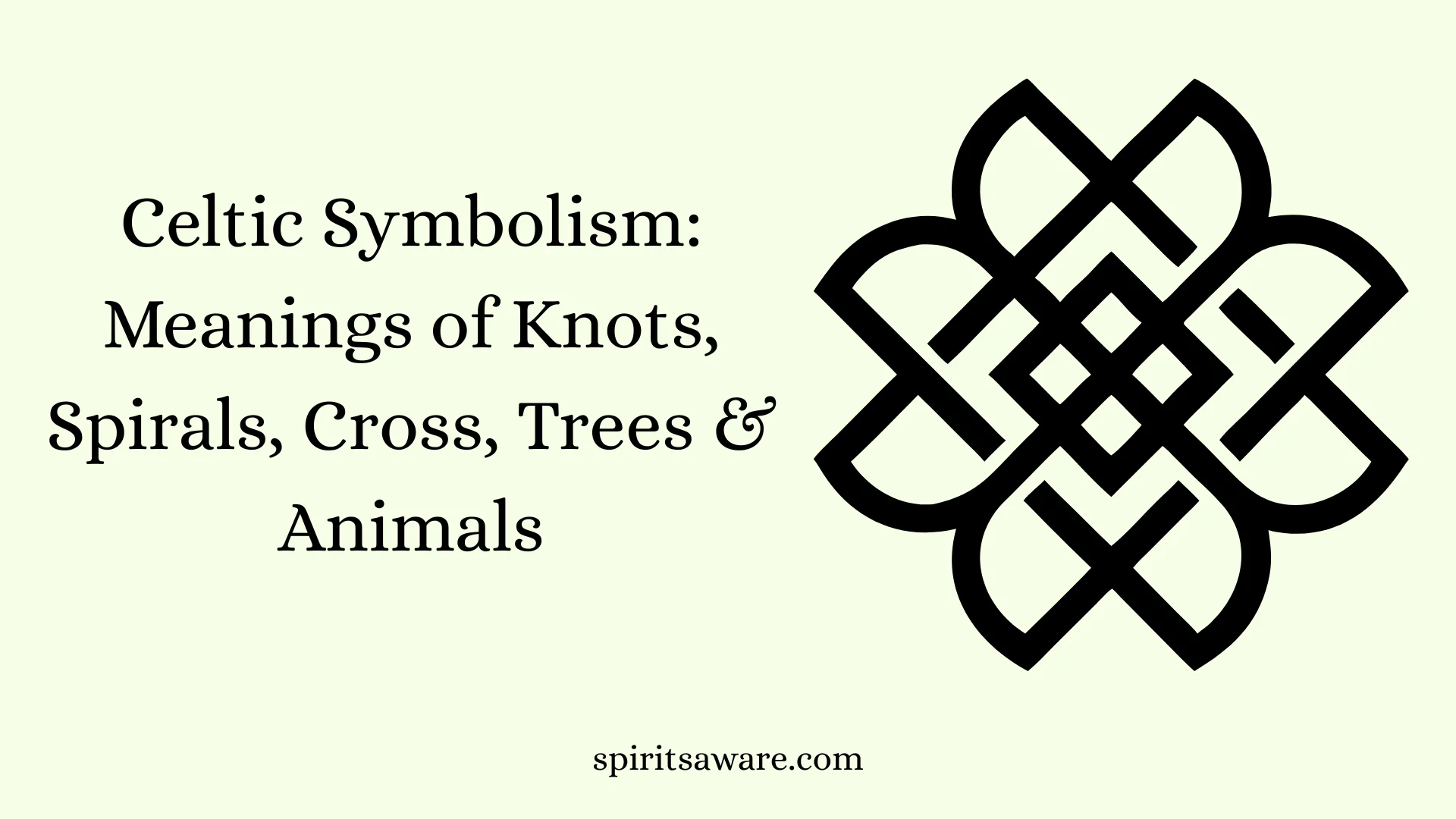
Celtic art is full of flowing lines, endless knots, carved spirals, sacred trees, and powerful animals. Today, these designs appear in tattoos, jewelry, churchyards, and family crests across the United States. When people search for Celtic Symbolism: Meanings of Knots, Spirals, Cross, Trees & Animals, they’re often trying to understand what these ancient patterns truly represent.
Although many Americans connect Celtic symbols with Irish heritage, their story is older and broader. These symbols developed across ancient Europe, especially in areas now called Ireland and Scotland. Over time, they blended pagan beliefs, early Christianity, and local folklore.
Today, Celtic symbolism speaks to identity, ancestry, spirituality, and personal strength. However, its meanings have shifted over centuries. Let’s explore what these symbols are, where they came from, and what they mean in modern American life.
Quick Answer
In the United States, Celtic Symbolism: Meanings of Knots, Spirals, Cross, Trees & Animals usually represents heritage, eternity, faith, and connection to nature. Knots suggest endless bonds, spirals reflect growth and cycles, crosses blend Christian and pre-Christian meaning, and trees and animals symbolize wisdom, strength, and spiritual balance.
TL;DR
• Knots symbolize eternity and unbroken connection
• Spirals reflect cycles, growth, and spiritual journey
• The Celtic cross blends sun and Christian symbolism
• Trees represent life, wisdom, and sacred nature
• Animals embody traits like courage, loyalty, and power
• In the USA, meanings center on heritage and identity
What Is Celtic Symbolism?
Celtic symbolism refers to a group of visual designs and sacred motifs developed by ancient Celtic peoples. For American readers, it often signals Irish or Scottish ancestry. However, its deeper meaning reaches back over 2,000 years.
Key Visual Features
Celtic symbols often include:
• Interlacing lines with no clear beginning or end
• Triple shapes like spirals or triquetras
• Crosses inside circles
• Stylized animals woven into patterns
• Trees with symmetrical branches and roots
These forms weren’t random decoration. Instead, they reflected a worldview where life, death, and nature moved in cycles.
Ancient Celtic Roots Before Christianity
Before Christianity reached Celtic lands, the Celts followed polytheistic beliefs tied to nature. Much of what we know comes from archaeology and later writings by outsiders like the Romans.
Sacred Geometry and Nature
Ancient Celts believed:
• Nature was alive with spiritual power
• Trees served as sacred meeting places
• The sun shaped life and seasonal cycles
• The number three held mystical meaning
• Death was a transition, not an end
Spirals carved into stones at sites like Newgrange predate Christianity by thousands of years. These spirals likely symbolized the sun, rebirth, or the soul’s journey.
Because early Celts left few written records, symbolism carried meaning through art. Patterns weren’t just beautiful; they were spiritual language.
The Meaning of Celtic Knots
Celtic knots are among the most recognized designs in the United States today. They appear in wedding rings, tattoos, and memorial art.
What Do Celtic Knots Symbolize?
• Eternity and endless life
• Loyalty and lasting bonds
• Interconnection of all things
• Spiritual unity
Unlike simple rope designs, Celtic knots have no visible start or finish. This endless loop suggests timelessness.
In modern America, couples often choose knot tattoos or jewelry to represent lifelong commitment. Because the design has no break, it’s seen as a powerful marriage symbol.
The Spiritual Meaning of Celtic Spirals
Spirals are older than knots in Celtic art. They appear carved into ancient stones and later manuscripts.
Triple Spiral (Triskelion)
The triple spiral, sometimes called a triskelion, often represents:
• Life, death, and rebirth
• Land, sea, and sky
• Mind, body, and spirit
• Past, present, and future
In pre-Christian times, the spiral likely symbolized the sun’s path and the rhythm of seasons. Today in the USA, people often interpret it as personal growth or spiritual awakening.
Because spirals move outward, they suggest expansion and transformation.
The Celtic Cross: Pagan Sun or Christian Faith?
The Celtic cross combines a traditional cross with a circle. It’s common in cemeteries and churches across Ireland and Scotland.
Historical Evolution
The circle may have symbolized:
• The sun’s power
• Eternal life
• God’s infinite presence
• Unity of heaven and earth
When Christianity spread through Celtic lands, missionaries adapted familiar symbols. The cross became a Christian sign, while the circle remained as a halo-like feature.
In the United States, especially among Irish-American communities, the Celtic cross often marks graves. It blends cultural pride with religious faith.
The Tree of Life in Celtic Tradition
Trees were sacred in ancient Celtic belief. Druids, the spiritual leaders, reportedly held rituals in groves.
What Does the Celtic Tree Symbolize?
• Connection between heaven, earth, and underworld
• Wisdom and protection
• Balance and harmony
• Ancestral roots
The tree’s branches reach upward while roots dig deep. That visual balance made it a powerful metaphor for stability.
In modern America, the Celtic Tree of Life appears in home decor and family-themed tattoos. It often represents heritage and generational strength.
Celtic Animal Symbolism
Animals held spiritual meaning in Celtic culture. They were seen as guides and guardians.
Common Celtic Animals and Their Meanings
• Stag – leadership and virility
• Raven – prophecy and transformation
• Boar – courage and warrior spirit
• Salmon – wisdom and knowledge
• Wolf – loyalty and instinct
Today, Americans with Celtic heritage sometimes choose these animals as tattoo designs to reflect personality traits.
Celtic Symbolism in the United States
Celtic imagery became especially visible in America during large Irish immigration waves in the 1800s.
Cultural Identity and Heritage
Celtic symbols in the USA often express:
• Irish-American pride
• Scottish clan identity
• Christian faith with Celtic roots
• Celebration during St. Patrick’s Day
Cities like Boston and Chicago have strong Irish-American traditions. During cultural festivals, Celtic crosses and knotwork often appear on banners and jewelry.
However, many Americans use Celtic designs simply for their beauty, without deep ancestral ties.
Emotional and Psychological Associations
Symbols shape how we feel. Celtic designs often create a sense of calm and continuity.
What Celtic Symbols “Signal”
• Stability and grounded identity
• Spiritual depth
• Respect for nature
• Timeless connection
Because the patterns flow endlessly, they can feel soothing. The repetition also suggests order in a complex world.
For people exploring ancestry, these symbols offer belonging.
Modern Usage: Tattoos, Jewelry, and Decor
Today, Celtic symbolism is part of mainstream design in the USA.
Popular Modern Uses
• Wedding bands with knot engravings
• Forearm or shoulder spiral tattoos
• Celtic cross necklaces
• Family Tree of Life wall art
• Festival merchandise and clothing
Social media has expanded interest in Celtic tattoos. However, meanings vary widely depending on personal interpretation.
Misunderstandings and Controversies
While most Celtic symbols are positive, context matters.
Important Clarifications
• Traditional Celtic knots are not hate symbols
• Some extremist groups misuse Norse, not Celtic, imagery
• Confusion can occur between Celtic and Viking symbols
• Intent and design details matter greatly
It’s important not to assume harmful meaning based solely on interlacing patterns. Most Celtic designs represent heritage and spirituality.
How Meanings Have Shifted Over Time
Symbol meanings evolve with culture.
Then vs. Now
| Context | Meaning in the USA | Common Associations | Notes |
| Ancient Pagan Era | Nature cycles | Sun, seasons | Pre-Christian roots |
| Early Christian Period | Faith and eternity | Cross, salvation | Symbol blending |
| 1800s Immigration | Ethnic pride | Irish identity | Heritage marker |
| 1900s Revival | Artistic tradition | Celtic art movement | Cultural revival |
| 2000s–2026 | Personal spirituality | Tattoos, decor | Identity expression |
Because of globalization, symbols now travel beyond their origins. Yet their ancient themes remain recognizable.
Read More: Symbolism of a Rose: Love, Beauty, and Spiritual Meaning
Cross-Cultural and Spiritual Interpretations
Although Celtic symbols are rooted in ancient Europe, similar ideas appear worldwide.
Shared Symbol Themes
• Circles symbolize eternity across cultures
• Trees represent life in many religions
• Spirals appear in Native and Asian art
• Animals often serve as spirit guides
However, each tradition has its own meaning system. It’s respectful to avoid blending them casually.
FAQs
What does a Celtic knot mean spiritually?
Spiritually, it represents eternity and unity. Because it has no beginning or end, it suggests the soul’s timeless nature.
Is the Celtic cross only Christian?
No. While widely used in Christianity, its circular form may come from earlier sun symbolism.
Are Celtic symbols Irish or Scottish?
They developed across ancient Celtic regions, including Ireland and Scotland. Today, both cultures embrace them.
What does the Celtic spiral symbolize?
It often represents growth, cycles, and spiritual evolution. Triple spirals add layered meaning.
Are Celtic symbols considered religious?
Some are religious, especially the cross. Others are cultural or spiritual rather than tied to a specific faith.
Conclusion
Celtic Symbolism: Meanings of Knots, Spirals, Cross, Trees & Animals connects ancient Europe with modern America. These designs began as sacred art shaped by nature, seasons, and belief in life’s cycles. Over centuries, they blended with Christianity and later became markers of ethnic pride.
Today in the United States, Celtic symbols often express heritage, faith, strength, and connection. Whether carved into stone, worn as jewelry, or inked as tattoos, they continue to carry powerful meaning.
And perhaps that’s their deepest message: life is interconnected, ever-moving, and rooted in something older than we can see.

Hannah Collins is the voice behind Spirits Aware, sharing thoughtful perspectives on spiritual growth, awareness, and conscious living.