Bonsai Symbolism: Patience, Harmony & Spiritual Growth speaks to something many Americans crave today—slowing down in a fast world. A bonsai tree is a miniature tree grown in a shallow container and carefully shaped over time. Yet it’s more than a gardening hobby. For many, it’s a living symbol.
In the United States, bonsai often represents patience, balance, and quiet strength. However, its roots stretch back centuries across Asia. Over time, it evolved from a spiritual art form into a modern symbol of mindfulness and personal growth.
Today, bonsai appears in homes, offices, tattoos, and social media feeds. So what does it truly symbolize—and why does it matter now?
Quick Answer
Bonsai Symbolism: Patience, Harmony & Spiritual Growth reflects dedication, balance with nature, and inner development. In the USA, bonsai often symbolizes mindfulness and personal discipline, while its older meanings connect to harmony, endurance, and spiritual awareness in East Asian traditions.
TL;DR
• Bonsai symbolizes patience and long-term dedication.
• It represents harmony between humans and nature.
• In the USA, it reflects mindfulness and calm living.
• Its roots trace to ancient Chinese and Japanese practices.
• Today, it appears in decor, tattoos, and wellness culture.
What Is a Bonsai Tree?
To understand bonsai symbolism, we first need to understand the tree itself. Bonsai is not a species. Instead, it’s a technique of growing and shaping small trees to resemble mature, full-sized ones in nature.
How Bonsai Appears
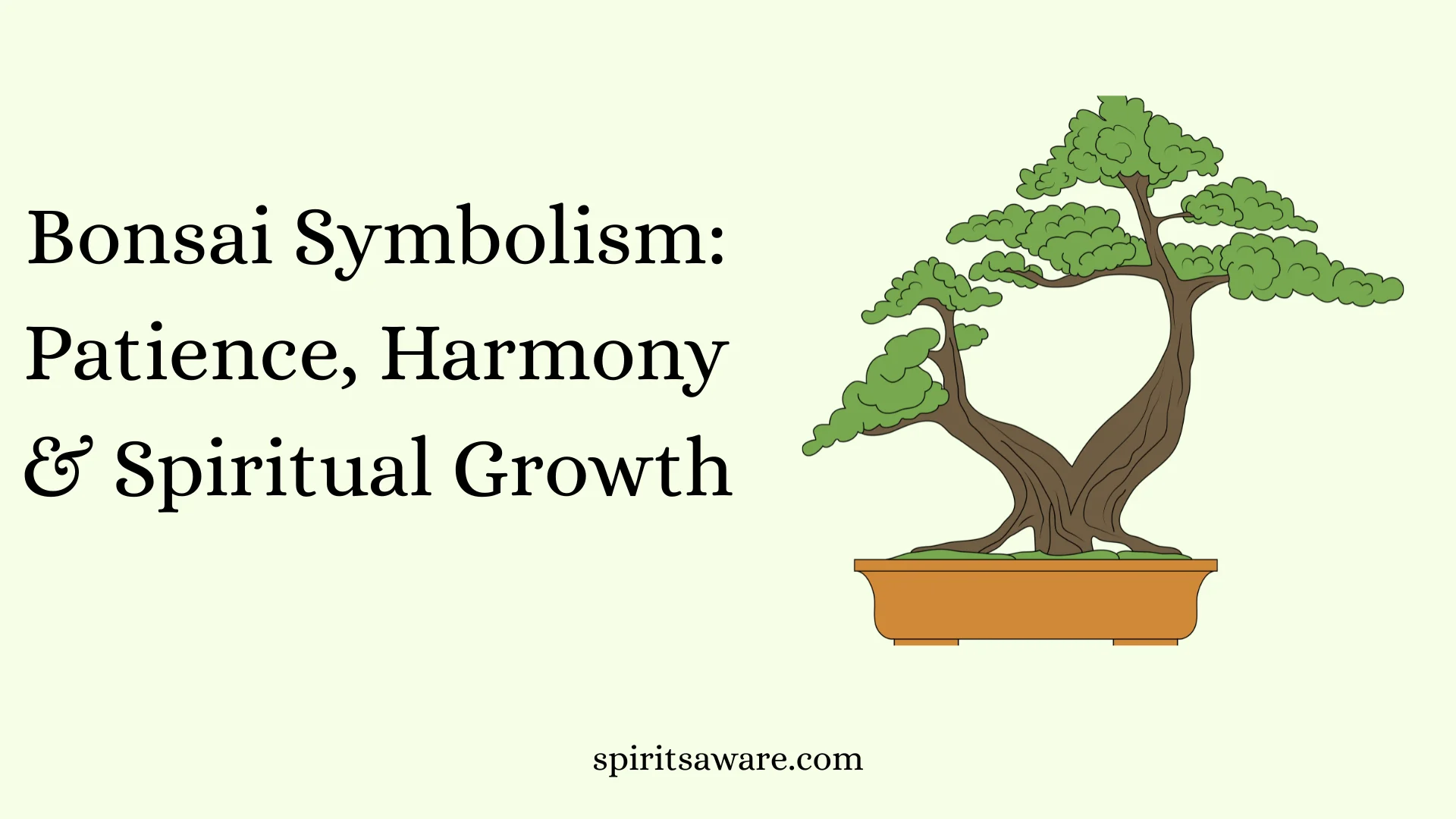
A bonsai tree usually features:
• A shallow ceramic pot
• Carefully pruned branches
• Twisted or curved trunks
• Visible surface roots
• Balanced negative space around foliage
Because of this design, bonsai looks ancient, even when it’s young. The shape suggests survival against wind, storms, and time. That visual story is part of its symbolic power.
The Meaning Behind Its Form
Each curve and trim is intentional. The tree isn’t forced into shape overnight. Instead, it’s guided slowly, sometimes over decades. Therefore, the very appearance of bonsai represents controlled growth rather than wild expansion.
Historical Roots of Bonsai
Although many Americans associate bonsai with Japan, its story begins earlier.
Ancient Chinese Origins
Bonsai evolved from an older Chinese practice called penjing. During the Han Dynasty (around 200 BCE), Chinese artists created miniature landscapes in containers. These weren’t just decorations. They reflected Taoist ideas about balance and harmony with nature.
In penjing, the small landscape symbolized the vast universe. Even a tiny tree could reflect cosmic order.
Development in Japan
Centuries later, Japanese monks brought the practice to Japan. Over time, it became more refined and minimalist. Influenced by Zen Buddhism, Japanese bonsai emphasized simplicity and meditation.
The Japanese word “bonsai” literally means “planted in a tray.” However, spiritually, it represented discipline and spiritual focus.
Arrival in the United States
Bonsai entered the American cultural scene in the late 19th and early 20th centuries through Japanese immigrants. After World War II, returning American soldiers brought interest back home. By the 1960s and 1970s, bonsai clubs formed across the country.
Today, bonsai is practiced widely across the USA as both art and hobby.
Spiritual Meaning of Bonsai
Many people ask whether bonsai has a spiritual meaning. Historically, it does.
Harmony With Nature
In Taoist and Zen traditions, bonsai symbolizes living in harmony with natural forces. The tree isn’t dominating nature. Instead, it cooperates with it.
• Balance between strength and flexibility
• Acceptance of natural limits
• Respect for time and seasons
• Unity between human intention and growth
Inner Discipline
Because bonsai requires consistent care, it reflects spiritual discipline. You can’t rush it. Therefore, it becomes a metaphor for spiritual growth—slow, steady, and intentional.
In American spiritual communities today, bonsai often appears in meditation rooms or yoga studios for this reason.
Bonsai Symbolism in the USA
While bonsai’s roots are Asian, its modern meaning in the USA has unique layers.
Mindfulness and Slow Living
In American culture, bonsai often symbolizes slowing down. Because modern life feels rushed, caring for a bonsai tree represents choosing patience.
• Intentional living
• Daily mindful practice
• Long-term commitment
• Personal growth over quick success
Artistic Expression
In the United States, bonsai is also seen as a creative art form. Artists shape trees in unique styles, expressing personality and vision.
Peace and Cultural Appreciation
For many Americans, bonsai symbolizes appreciation of Japanese culture. However, respectful practice matters. Bonsai is viewed as an art form rooted in tradition, not just a decorative trend.
Emotional and Psychological Associations
Symbols affect how we feel. Bonsai carries powerful emotional signals.
Calm and Stability
The small tree often creates feelings of peace. Its balanced shape suggests emotional stability.
Resilience
Because bonsai trees appear weathered, they symbolize survival. Even in miniature form, they look strong.
• Endurance through hardship
• Quiet confidence
• Strength without aggression
• Wisdom gained over time
Control and Patience
Psychologically, bonsai represents control in a healthy way. The caretaker shapes growth but cannot fully command nature. That balance mirrors emotional maturity.
Bonsai in Home Decor and Design
In American homes, bonsai is often placed in visible but quiet spaces.
Interior Meaning
A bonsai in a living room or office signals calm intention. It often reflects:
• Minimalist taste
• Love of nature
• Focus and discipline
• Appreciation for tradition
Because it requires care, it also communicates responsibility.
Feng Shui Influence
Some Americans connect bonsai with feng shui principles. While feng shui originates in China, its ideas about energy flow are popular in the USA. In this context, bonsai symbolizes balanced energy and peaceful surroundings.
Bonsai Tattoos and Personal Identity
In recent years, bonsai tattoos have grown in popularity in the United States.
What a Bonsai Tattoo Can Mean
• Patience through life struggles
• Growth despite limitations
• Cultural respect
• Inner calm
Unlike large tree tattoos symbolizing expansion, bonsai tattoos often represent contained strength. They suggest that size does not equal power.
However, people choosing this symbol often research its background to avoid shallow use.
Common Bonsai Styles and Their Symbolism
Different bonsai shapes carry slightly different meanings.
| Style | Meaning in the USA | Common Associations | Notes |
| Formal Upright | Stability and order | Discipline, leadership | Straight trunk |
| Informal Upright | Adaptability | Flexibility, balance | Slight trunk curve |
| Slanting | Overcoming obstacles | Resilience | Leaning posture |
| Cascade | Endurance | Strength in hardship | Grows downward |
| Forest Style | Community | Family, unity | Multiple trees |
These interpretations are modern and flexible. Traditionally, styles reflected natural landscapes more than symbolic codes.
Misunderstandings and Cultural Sensitivity
Although bonsai is widely loved, misunderstandings exist.
“Cruelty” Concerns
Some people think bonsai is harmful to trees. However, properly cared-for bonsai can live as long as full-sized trees. The shaping process does not inherently harm the tree when done responsibly.
Cultural Appropriation Questions
Because bonsai has Japanese roots, some ask whether non-Japanese people should practice it. Generally, respectful study and acknowledgment of origins are encouraged. Problems arise only when traditions are mocked or misrepresented.
Not a Symbol of Restriction
Some critics interpret bonsai as stunted growth. However, most practitioners see it as guided growth, not limitation.
How Bonsai Symbolism Has Shifted Over Time
Like all symbols, bonsai’s meaning evolved.
From Elite Art to Global Hobby
In ancient China and Japan, bonsai was associated with scholars and monks. Today, it’s accessible to hobbyists worldwide.
From Spiritual Tool to Lifestyle Icon
In the USA, bonsai often appears in wellness culture. It now symbolizes:
• Mindful productivity
• Calm leadership
• Personal refinement
• Intentional simplicity
However, its deeper spiritual roots remain important to many practitioners.
Why Bonsai Still Matters Today
In a culture focused on speed and growth, bonsai offers a counter-message. Bigger isn’t always better. Faster isn’t always wiser.
Because Americans increasingly value mental health and balance, bonsai symbolism resonates strongly. It reminds people that growth takes time—and that shaping your life is a gradual process.
Read More: Mantis Symbolism | Spiritual Meaning, Culture & Life Lessons
FAQs
What does a bonsai tree symbolize in modern culture?
In modern culture, bonsai symbolizes patience, balance, and personal growth. In the USA, it often reflects mindfulness and calm living.
Is bonsai connected to religion?
Historically, bonsai was influenced by Taoism and Zen Buddhism. However, today it’s practiced by people of many beliefs as an art form.
Does a bonsai tree mean good luck?
Some traditions associate bonsai with harmony and positive energy. In American homes, it’s more commonly seen as a symbol of peace and focus.
What does a bonsai tattoo represent?
A bonsai tattoo usually represents resilience, controlled growth, and inner strength. It often reflects personal transformation.
Is bonsai a symbol of limitation?
Most practitioners reject that idea. Instead, bonsai symbolizes guided growth and harmony with natural limits.
Conclusion
Bonsai Symbolism: Patience, Harmony & Spiritual Growth captures a powerful idea: meaningful growth takes time. Although it began centuries ago in China and Japan, bonsai now carries strong meaning in the United States.
Today, it represents balance in a busy world, resilience in hardship, and beauty shaped through care. Whether displayed in a home, worn as a tattoo, or cultivated as a hobby, bonsai reminds us that growth is both natural and intentional.
In the end, bonsai symbolism isn’t about making something small. It’s about shaping life with patience—and allowing harmony to grow.