
The banyan tree is one of the most visually striking trees in the world. With its wide canopy and hanging aerial roots, it doesn’t just grow upward—it grows outward. Banyan Tree Symbolism | Spiritual, Cultural & Eternal Meanings explores why this unusual growth pattern has inspired ideas of immortality, shelter, wisdom, and connection across centuries.
In the United States, people may not see banyan trees every day. However, the symbol appears in yoga spaces, meditation art, tattoos, and spiritual writing. Because the tree looks eternal and protective, it resonates with modern themes of grounding and resilience.
To understand its meaning today, we have to look at where it began—and how its symbolism traveled across cultures before reaching American consciousness.
Quick Answer
Banyan Tree Symbolism | Spiritual, Cultural & Eternal Meanings represents longevity, interconnectedness, and spiritual shelter. In the USA, it often symbolizes grounding, wisdom, and personal growth. Globally, it has deep roots in Hindu and Buddhist traditions, where it signifies eternal life and divine connection.
TL;DR
• Symbol of longevity and endurance
• Represents connection and community
• Sacred in Hindu and Buddhist traditions
• In the USA, linked to grounding and mindfulness
• Popular in tattoos and spiritual decor
• Suggests eternal life through endless growth
What Is a Banyan Tree?
Before exploring meaning, it helps to understand what makes this tree unique. Its physical form directly shapes its symbolism.
Physical Appearance and Growth Pattern
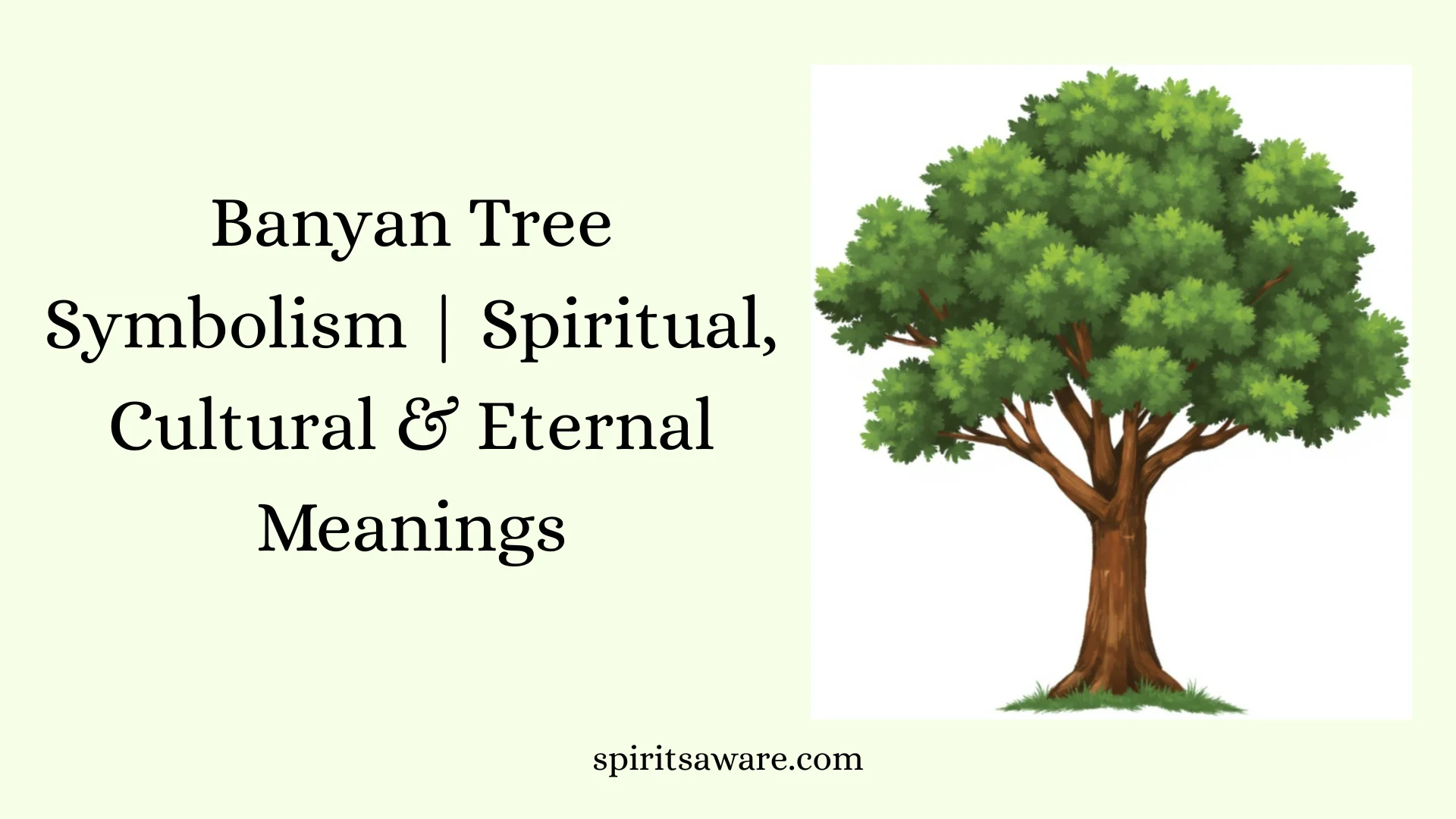
The banyan tree is most commonly associated with the species Ficus benghalensis. Unlike typical trees, it sends down aerial roots from its branches. These roots reach the ground and form new trunks.
Because of this:
• One tree can look like a forest
• It spreads horizontally over vast areas
• Its canopy provides deep shade
• It appears ancient even when still growing
This expanding structure gives the banyan a sense of eternity. Instead of one trunk aging alone, it constantly renews itself.
Ancient Origins of Banyan Tree Symbolism
To understand its deeper meaning, we must look at South Asia, where the banyan tree first gained sacred status.
Sacred in Hindu Tradition
In Hindu belief, the banyan tree is associated with divinity and cosmic order. It is sometimes linked with the god Vishnu and seen as a symbol of eternal life.
The tree’s endless expansion reflects:
• Immortality
• The cycle of life and rebirth
• Divine shelter
• Spiritual knowledge
Villages in India traditionally gathered beneath banyan trees for meetings and rituals. This made it both sacred and social.
Buddhist Connections
The banyan is also connected to enlightenment through association with the Gautama Buddha. Although he meditated under the Bodhi tree (a related fig species), the banyan often shares symbolic ground in art and storytelling.
In Buddhist symbolism, it suggests:
• Awakening
• Inner stillness
• Wisdom through patience
• Shelter from suffering
Banyan Tree Meaning in the United States
Although native to South Asia, the banyan has taken on new meaning in American culture. This section focuses on how it’s understood today in the USA.
Symbol of Mindfulness and Spiritual Growth
In the U.S., banyan imagery appears in:
• Yoga studios
• Meditation apps
• Holistic healing spaces
• Spiritual book covers
Here, it often symbolizes grounding and inner peace. Because Americans value personal growth, the banyan becomes a metaphor for expanding consciousness.
Cultural Adaptation
Unlike in India, where it holds specific religious meaning, in the U.S. it is usually interpreted in broader spiritual terms.
It often represents:
• Emotional stability
• Community support
• Personal transformation
• Strength through connection
Today, it’s less about formal religion and more about universal spirituality.
Spiritual Meaning of the Banyan Tree
For many people, the banyan tree feels sacred—even outside organized religion.
Core Spiritual Themes
Across traditions, the tree symbolizes:
• Eternal life
• Interconnection of all beings
• Protection and refuge
• Wisdom gained over time
Its roots reaching downward and branches spreading outward create a visual metaphor. It connects heaven and earth.
Because of this, the banyan often appears in spiritual art that focuses on unity and wholeness.
Banyan Tree as a Symbol of Immortality
The tree’s growth pattern naturally suggests eternity.
Why It Feels Eternal
A single banyan can live for hundreds of years. As old trunks decay, new ones grow from aerial roots.
This leads to symbolism such as:
• Life beyond death
• Renewal after hardship
• Legacy that continues
• Generational strength
In American contexts, this meaning often shows up in memorial art or family-themed tattoos.
The Banyan Tree and Community
One of the most beautiful meanings of the banyan tree involves human connection.
A Natural Gathering Place
Historically, entire communities met beneath its shade. This created symbolism tied to:
• Unity
• Shared wisdom
• Leadership
• Protection
In modern America, this theme resonates strongly. The tree represents support networks and chosen family.
Psychological and Emotional Symbolism
Symbols often speak to emotions more than logic. The banyan is no exception.
What It Signals Emotionally
Psychologically, the banyan tree suggests:
• Stability during chaos
• Patience in long journeys
• Strength without aggression
• Growth that takes time
Because it spreads slowly and steadily, it reflects resilience rather than quick success.
For Americans facing rapid change, that message feels calming.
Banyan Tree in Tattoos and Personal Identity
In the U.S., tattoo culture often embraces tree imagery. The banyan has a special place in that world.
Common Tattoo Meanings
People choose banyan tree tattoos to express:
• Spiritual awakening
• Deep family roots
• Endurance through hardship
• Connection across generations
Unlike oak or pine trees, the banyan feels global and spiritual. It suggests both ancestry and forward growth.
Banyan Tree in Art, Decor, and Media
The symbol has moved beyond religion into lifestyle spaces.
Where You See It Today
• Meditation room wall art
• Jewelry designs
• Eco-conscious branding
• Spiritual retreat logos
Its wide canopy often represents inclusion and openness.
Because environmental awareness is strong in the USA, the banyan can also symbolize harmony with nature.
Cross-Cultural Meanings of the Banyan Tree
While the U.S. interpretation is broad, the tree’s global meanings remain important.
Comparative Symbolism Table
| Context | Meaning in the USA | Common Associations | Notes |
| Hindu tradition | Spiritual wisdom | Divine shelter | Linked to sacred texts |
| Buddhist art | Enlightenment | Inner peace | Connected to meditation imagery |
| American spirituality | Grounding | Mindfulness | Often non-denominational |
| Environmental symbolism | Longevity | Sustainability | Used in eco messaging |
| Family symbolism | Generational roots | Legacy | Popular in tattoos |
This table shows how meanings overlap while shifting across regions.
Misunderstandings and Modern Shifts
As symbols travel, meanings evolve. The banyan tree is no exception.
Common Misunderstandings
• Confusing it with the Bodhi tree
• Assuming it belongs to one religion only
• Treating it as a generic “tree of life”
• Ignoring its cultural origins
In American usage, the symbol is often simplified. However, awareness of its roots is growing.
Shifts Over Time
Historically, the banyan symbol was tied to specific rituals. Today, it’s often universalized.
This shift reflects broader cultural blending in the 21st century. People seek symbols that feel ancient yet inclusive.
Banyan Tree vs. Tree of Life
Many Americans group the banyan with the “Tree of Life” idea.
Similarities and Differences
Both represent:
• Interconnection
• Growth
• Continuity
However, the banyan is a real botanical species. The Tree of Life is a broader mythic symbol found in many cultures.
Understanding this difference helps avoid cultural flattening.
Read More: Forget-Me-Not Flower Symbolism: Love, Memory, and Spiritual Meaning
FAQs
What does the banyan tree symbolize spiritually?
It symbolizes eternal life, wisdom, and unity. Many see it as a sign of grounding and spiritual growth.
Is the banyan tree sacred?
Yes, especially in Hindu tradition. However, in the U.S., it’s often viewed in a broader spiritual sense.
Why is the banyan tree associated with immortality?
Because it renews itself through aerial roots, it appears endless. This natural pattern inspires ideas of eternal life.
What does a banyan tree tattoo mean?
It usually represents resilience, family roots, and spiritual awakening. Meaning depends on personal intention.
Is the banyan tree the same as the Bodhi tree?
Not exactly. The Bodhi tree is a related fig species. However, their symbolism overlaps in meditation traditions.
Why is the banyan tree important in culture?
Historically, communities gathered beneath it. Therefore, it became a symbol of unity and shared wisdom.
Conclusion
The banyan tree is more than a large tropical plant. Through Banyan Tree Symbolism | Spiritual, Cultural & Eternal Meanings, we see how its spreading branches and descending roots shaped ideas of immortality, wisdom, and connection.
In the United States today, the banyan represents grounding in a fast-moving world. It stands for growth that takes time and strength built through community. At the same time, its ancient roots remind us to respect the cultures that first honored it.
Like the tree itself, its meaning continues to expand—branch by branch, generation by generation.