When I first brought a glossy, heart-shaped Anthurium into my living room, I immediately felt its tropical energy and warm feelings, showing how Anthurium Symbolism truly reflects love and hospitality. Its bold colors, architectural form, and vibrant appearance make it a statement flower in floral arrangements, weddings, or bouquets, while houseplants like these communicate connection, joy, and lasting affection in homes, hotels, and floral shops worldwide.
Known as Flamingo Flower, Boy Flower, Painter’s Palette, and Painted Tongue, the Anthurium impresses with distinctive shapes, bright leaves, and buds in red, pink, salmon, or pale yellow, adding colorful, compelling decor. Botanically, it belongs to a genus of tropical plants native to Central America, South America, and Hawaii, once hidden in rainforests and obscurity. Today, its presence in interiors, housewarming gifts, or tattoos continues to symbolize hospitality, abundance, and welcoming spirits.
Each Anthurium carries a story: its heart-like form evokes passion and admiration, while unique structure, tail-like spadix, and spathes reflect exotic origins and mythical tales. In floristry, florists celebrate its huge, lance-shaped leaves, buds, and compositions. Legends say it protects against evil, absorbs negative energy, or signals luck, and when rain is approaching, its petals remind us of prophetic tales and magical fairies. Seeing its glossy, irregular flowers in a bouquet or pots feels wonderful, heartfelt, and irresistibly beautiful, making the Anthurium an emblem of lasting happiness and tropical heart energy.
Quick Answer
Anthurium symbolizes love and hospitality—especially in the USA. Its bold, heart‑like shape, long‑lasting blooms, and tropical origin make it a symbol of enduring affection, welcoming warmth, and vibrant energy. Its meanings also extend to abundance, passion, and emotional connection.
TL;DR
• Heart‑shaped blooms suggest love, welcome, and connection.
• Commonly symbolizes hospitality, friendship, and warmth.
• In the USA favored as gifts and décor for romance and housewarmings.
• Also linked to abundance, passion, and tropical charm.
• Appears in weddings, social media plant culture, and art.
• Respect for its toxicity mitigates misuse or misunderstanding.
What Is an Anthurium?
This section explains what an anthurium looks like and why its physical traits inform its symbolic meaning.
Physical Description
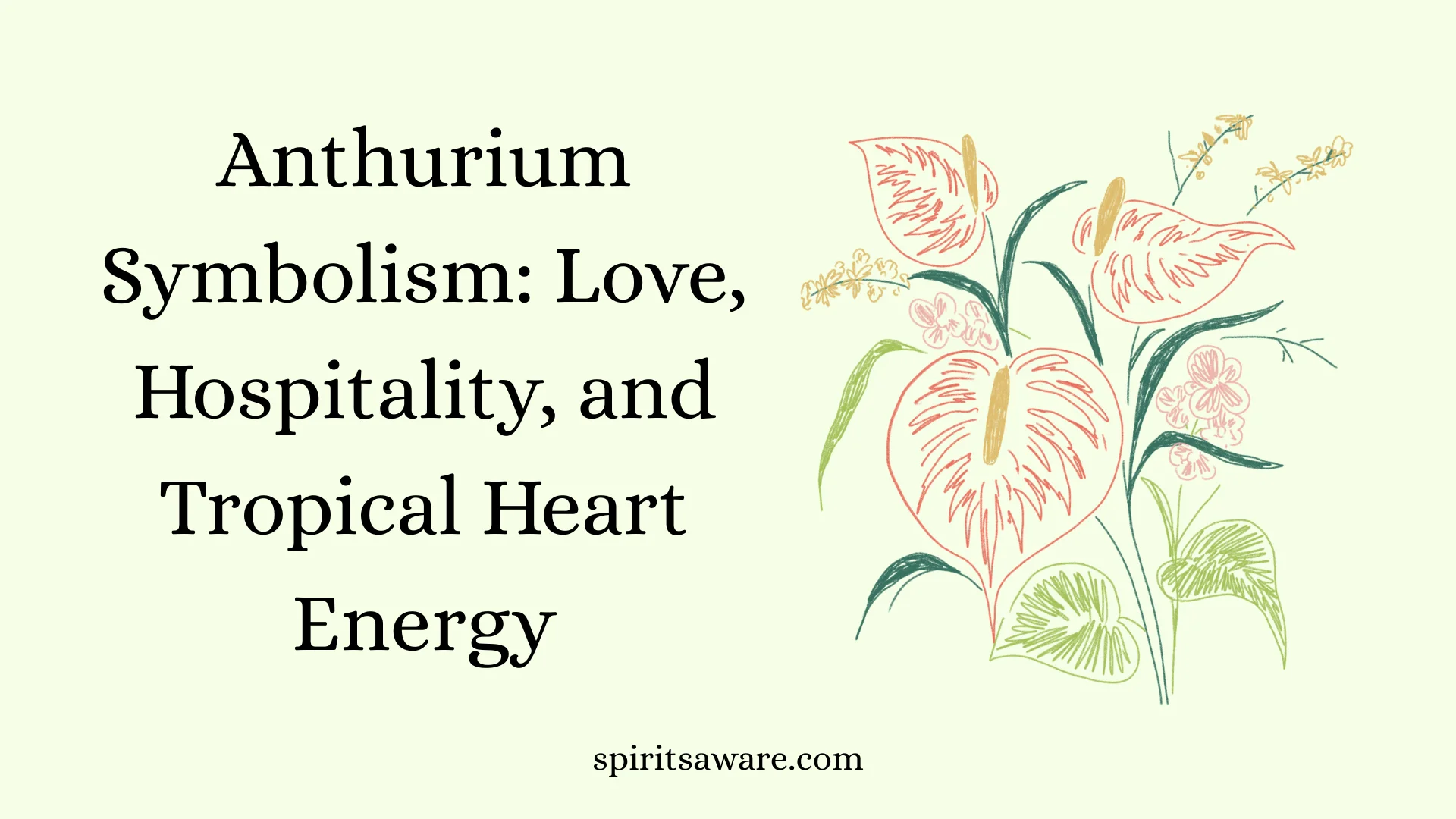
- Glossy, heart‑shaped spathes in red, pink, white, green, or bi‑color shades.
- A central spike (spadix) holding tiny flowers.
- Broad green leaves complement the bloom.
- Also known as flamingo flower, tailflower, or laceleaf.
The colored spathe is what most people call the “flower,” even though the real flowers are on the spadix. Its sleek look feels modern and decorative, yet invites emotional interpretations tied clearly to the heart shape.
Scientific Background
The common species grown in homes and floral shops is Anthurium andraeanum, native to Colombia and Ecuador.
Despite its tropical origins, it thrives as an indoor plant in many parts of the U.S., shaping its modern symbolic life far from its birthplace.
Historical Context and Evolution
Unlike flowers with millennia of symbolic history, anthuriums are relatively recent players in the symbolic world—but their meanings developed quickly.
Name and Early Botanical History
The word anthurium comes from Greek anthos (“flower”) and oura (“tail,” referring to the spadix).
European collectors introduced many tropical plants, including anthuriums, into Western horticulture in the late 1800s.
Symbol Interpretations Over Time
Though not ancient, anthuriums picked up symbolic weight through floral language traditions where shape and color carried meaning. Their heart shape soon linked them to love and affection, much like roses but with a tropical twist.
In the Victorian flower language—used in the 19th century to send coded messages—anthuriums could represent passion or deep emotional connection due to their form and color.
Symbolism in the USA
In the United States, anthuriums have layered meanings shaped by cultural trends, interior design, and emotional expression.
Love, Romance, and Relationships
Because many anthuriums look like hearts, Americans often associate them with romantic love. They’re used in Valentine’s Day arrangements, anniversary bouquets, and wedding décor when people want something bold and fresh instead of classic roses.
Hospitality and the Warm Welcome
American floral guides frequently refer to anthuriums as symbols of hospitality—perfect for housewarmings or gifts that say “you’re welcome here.” The open, inviting shape feels like an open heart.
Tropical Nostalgia and Interior Style
With modern design trends favoring plant life, anthuriums signal a taste for tropical flair and curated spaces. They often appear in coastal homes, urban apartments, and hospitality settings, where their presence evokes warmth, travel, and escape.
Abundance and Positive Vibes
Their vivid colors and long life in arrangements contribute to a sense of abundance and joy. In U.S. contexts, people interpret them as symbols of positivity, longevity, and emotional richness.
Cross‑Cultural & Spiritual Meanings
While this article centers on U.S. symbolism, it’s respectful and useful to highlight other traditions.
Hawaiian Interpretations
Though not native to Hawaii, the plant has been embraced there, often aligning with the spirit of aloha—love, kindness, and welcome. It appears in leis or décor around celebrations, symbolizing generous greeting and warmth.
Feng Shui Views
In some Asian‑derived feng shui practices, people place anthuriums to attract positive energy or prosperity. Red varieties especially align with passion and vibrant life force.
Emotional & Psychological Associations
Anthuriums speak not just to visual taste but to interior emotional landscapes.
Boldness and Confidence
Their sharp lines and vivid hues can reflect personalities that are expressive, confident, or unapologetically present.
Warmth and Comfort
In domestic settings, anthuriums can foster feelings of welcome, cozy warmth, and friendly energy.
Stability and Endurance
Because the blooms last long, they imply lasting connections—be it friendship, family bonds, or enduring love.
Modern Uses & Trends
Anthurium meanings show up across creative and cultural realms.
Home Decor and “Plant Parenting”
Houseplants are now symbols of care, home pride, and lifestyle identity. Anthuriums anchor shelves, tables, and corners with purpose and style.
Weddings and Celebrations
From bridal bouquets to centerpieces, their tropical romance makes them favorites in celebration florals.
Tattoos and Artistic Expression
Some people choose anthurium tattoos to represent love, warmth, or personal growth. Its heart shape and tropical feel suit themes of commitment and hospitality.
Digital Aesthetics
Social media plant culture highlights anthuriums as bold visual icons in curated interiors.
Misunderstandings, Misuses & Controversies
No symbol is free from confusion.
Toxicity Misalignment
Despite its warm symbolism, anthuriums are toxic if chewed, including for pets and small children. This contrasts with their welcoming image and requires careful placement.
Sexualized Nicknames
Names like “boy flower” stem from informal vernacular, not traditional cultural meaning. People should be aware of playful use versus respectful intent.
How Meaning Has Shifted Over Time
Anthuriums moved quickly from exotic greenhouse curiosities to mainstream houseplants and design fixtures. As they became more accessible, their symbolism broadened from luxury to everyday warmth and expressive identity.
In online plant communities, rare varieties sometimes signal status, while simpler types make statements about style and care.
Read More: Chinese Color Symbolism: Meanings, Myths & Modern Life
FAQs
Q1: What does Anthurium symbolize?
Anthurium is a heart-shaped, glossy flower that symbolizes love, hospitality, connection, and tropical heart energy.
Q2: Why is it called Flamingo Flower or Boy Flower?
These names highlight its distinctive shape, vibrant colors, and exotic, architectural appearance, making it popular in floral arrangements.
Q3: Where are Anthuriums native to?
Anthuriums come from rainforests in Central America, South America, and Hawaii, part of a genus of tropical plants.
Q4: How do people use Anthuriums today?
They are used as houseplants, in weddings, bouquets, housewarming gifts, and decor, expressing affection, joy, and welcoming spirits.
Q5: What are the special features of Anthuriums?
Glossy leaves, heart-like buds, tail-like spadix, spathes, and bright multicolored buds make them unique, compelling, and irresistibly beautiful.
Q6: Do Anthuriums have symbolic stories?
Yes, they are associated with passion, admiration, protection against evil, absorbing negative energy, and prophetic tales.
Q7: Can Anthuriums bloom long-term?
Yes, they are long-lasting, blooming houseplants that can thrive in various conditions, spreading happiness and warm feelings.
Conclusion
The Anthurium stands as a stunning emblem of love, hospitality, and tropical heart energy, with its glossy, heart-shaped flowers and vibrant colors that bring warm feelings and a welcoming spirit into any home, hotel, or living room. Its architectural form, tail-like spadix, and unique spathes make it not just a flower but a symbol of connection, affection, and joy that resonates in floral arrangements, bouquets, and houseplants worldwide.
Whether known as the Flamingo Flower, Boy Flower, or Painter’s Palette, the Anthurium reflects tropical origins from Central America, South America, and Hawaii, bridging mythical tales, legendary protection, and prophetic symbolism. Its presence in decor, weddings, housewarming gifts, and even tattoos continues to express abundance, passion, and generosity, creating lasting impressions and spreading happiness.
Ultimately, the Anthurium is more than a plant—it’s a statement of love, a symbol of hospitality, and a tropical treasure that inspires admiration, warmth, and connection in every space it graces.

Hannah Collins is the voice behind Spirits Aware, sharing thoughtful perspectives on spiritual growth, awareness, and conscious living.